
A huge thank you to ManualLensUA ( check out their Telegram channel ) for providing the Olympus OM-System Zuiko MC Auto-W 1:2.8 f=28mm lens. They have a wide selection of used lenses for various systems, including similar Olympus lenses.
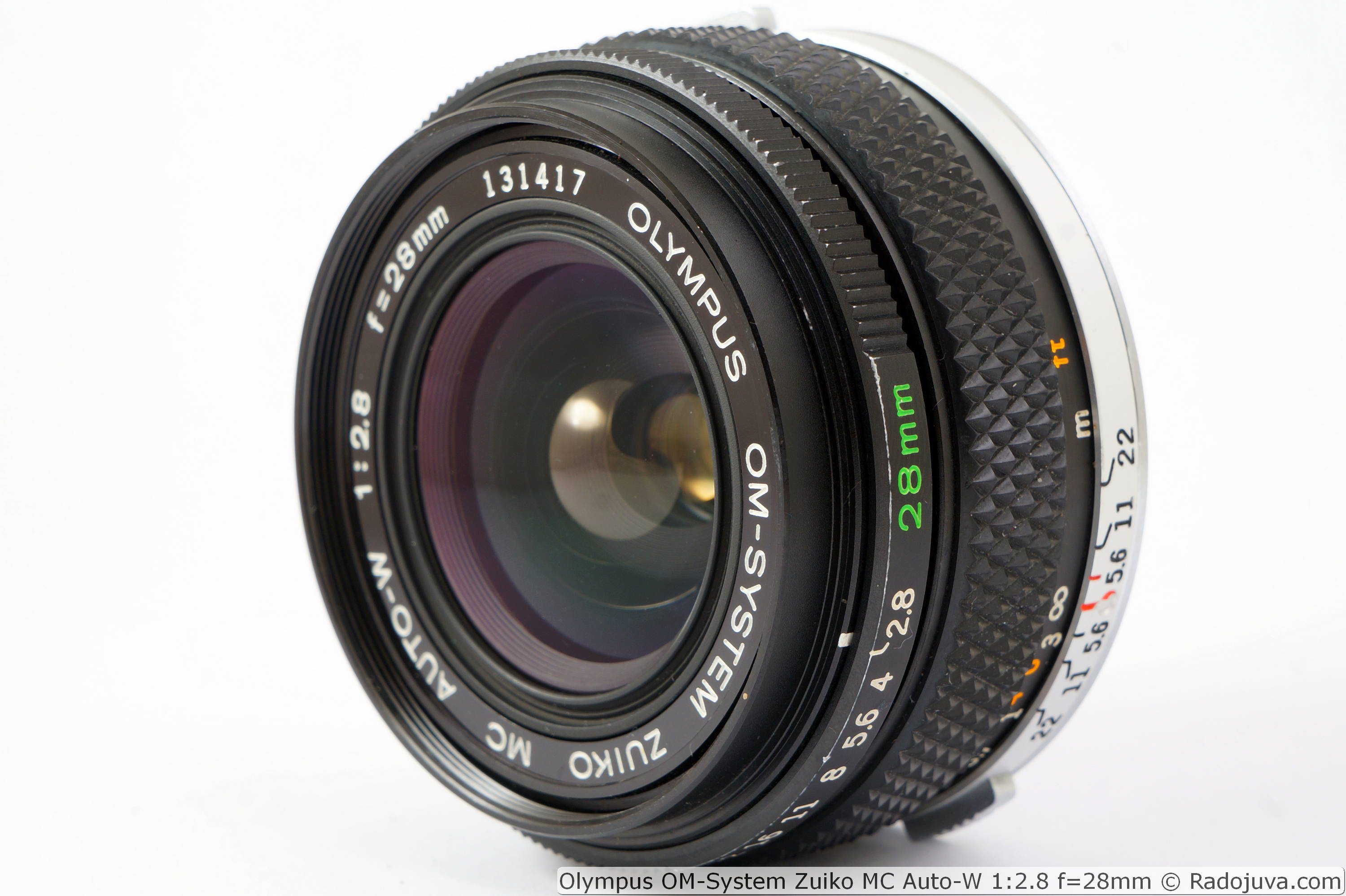
Olympus OM-System Zuiko MC Auto-W 1:2.8 f=28mm. Enlarge.
In short
Olympus OM-System Zuiko MC Auto-W 1:2.8 f=28mm is a classic wide-angle lens of the film era. Very compact, lightweight, multi-coated. Optically not bad.
The lens comes in several versions, the latest of which is the Olympus OM-System Zuiko Auto-W 28mm 1:2.8. Due to the unification of names, it does not have the inscription 'MC', while the multi-coating itself remains in place.

Olympus OM-System Zuiko MC Auto-W 1:2.8 f=28mm
Appearance
The review lens was in good condition.


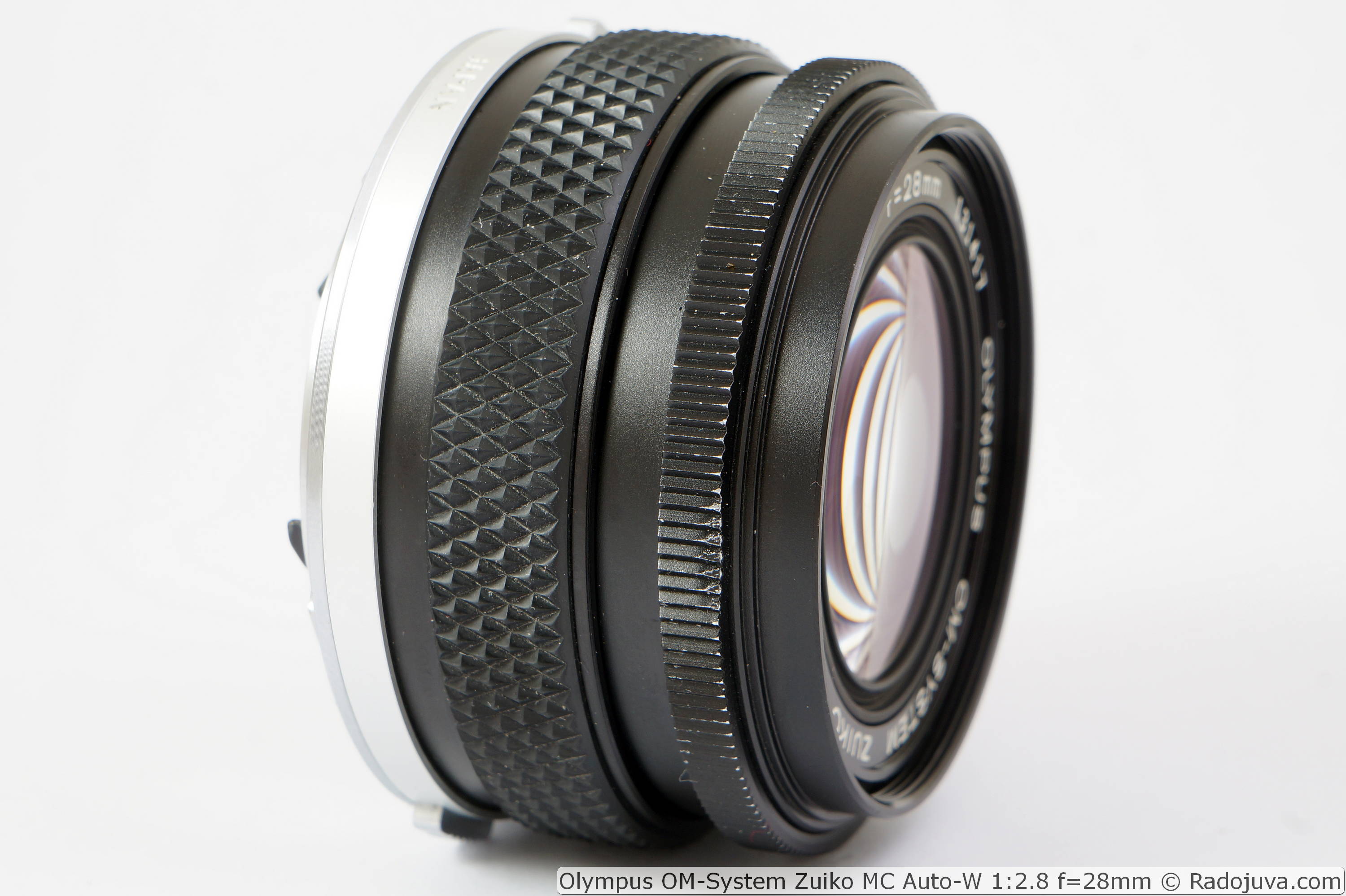

Main technical characteristics of Olympus OM-System Zuiko MC Auto-W 1:2.8 f=28mm:
| Name of instances from review | Olympus OM-System Zuiko MC Auto-W 1:2.8 f=28mm 131417 |
| Basic properties |
|
| Front Filter Diameter | 49 mm, metal thread for filters |
| Body materials | All parts of the lens barrel are made of metal, the focusing ring is rubberized |
| Focal length | 28 mm |
| Diagonal viewing angles | 75° for full frame cameras |
| Zoom ratio | 1 x |
| Designed by | for film cameras with Olympus OM mount |
| Number of aperture blades | 6 straight (not rounded) petals |
| Tags |
|
| Diaphragm | from F/2.8 to F/22. The lens has an aperture control ring |
| MDF (minimum focusing distance) | 0.3 meters |
| The weight | 169 grams (measured, only the lens itself) |
| Optical design | 6 elements in 6 groups. The lens does not use special optical elements.
|
| Lens hood | Must screw into the front filter thread |
| Period | Produced since 1983. Later updated to the Olympus OM-System Zuiko Auto-W 28mm 1: 2.8 version |
| Manufacturer country | JAPAN (Lens made in Japan) |
| Price | New do not sell. In a variant B. at. 50-150 cu |

This lens can be easily mounted on any modern digital mirrorless camera. To install it, use the appropriate adapter/mount, which allows you to use lenses with the Olympus OM mount on the desired mirrorless system without any problems or limitations. Below is a list of systems/mounts with links to the necessary adapters/mounts: Sony E/FE/NEX , Canon RF/RF-S , Canon EF-M , Nikon Z , Nikon 1 , Leica L , FujiFilm GFX , FujiFilm X , Samsung NX , Micro Four Thirds.
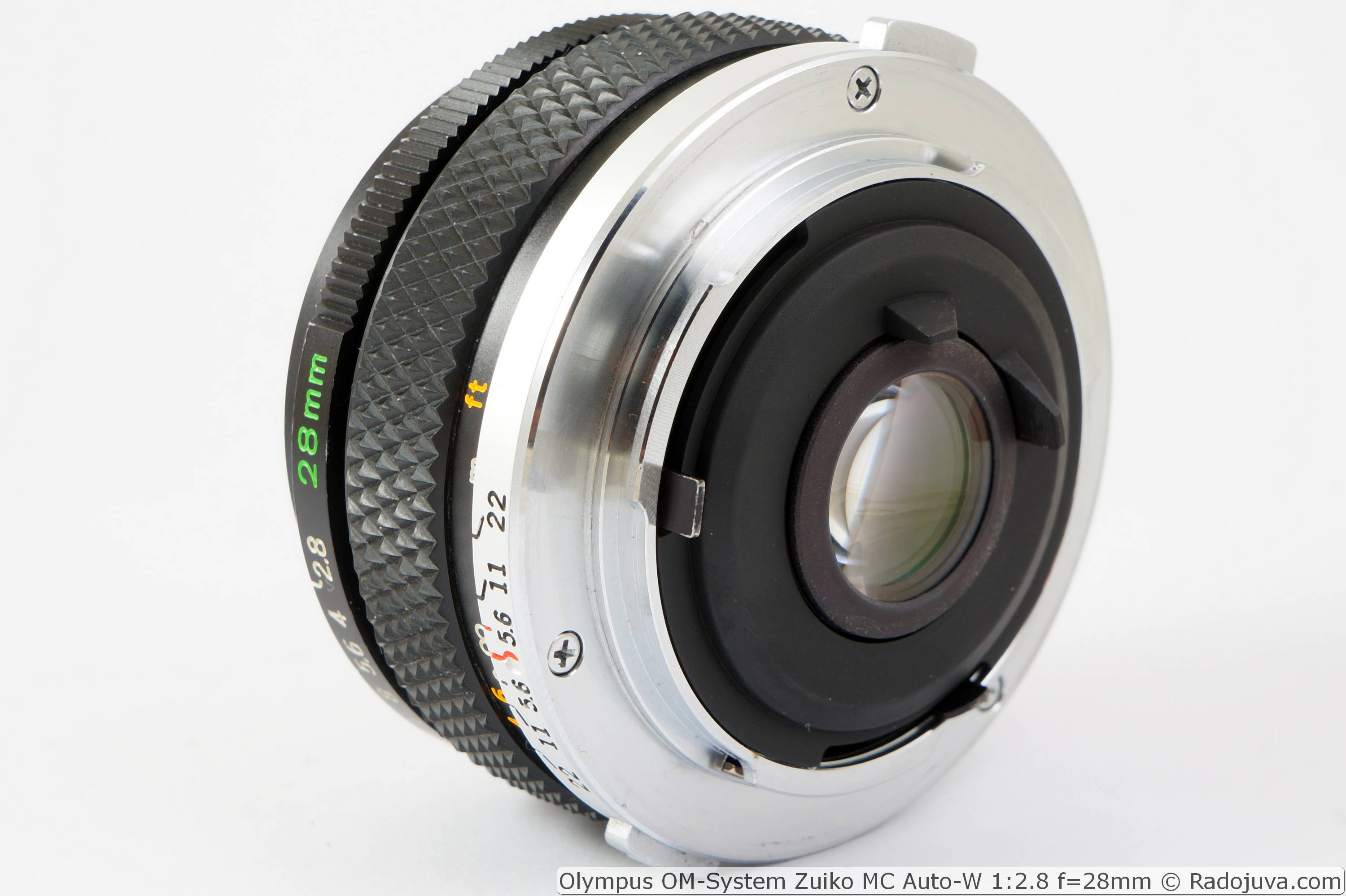
Olympus OM-System Zuiko MC Auto-W 1:2.8 f=28mm
Assembly, control, focus
Olympus OM-System Zuiko MC Auto-W 1:2.8 f=28mm – super compact and lightweight.
The lens barrel is very well made . The filter diameter is only 49 mm. The focus ring is rubberized, but the aperture ring is not.
The aperture control ring is located at the front of the lens, convenient to use, and has no intermediate values.
The Olympus OM-System Zuiko MC Auto-W 1:2.8 f=28mm focusing ring rotates approximately 90 degrees. During focusing, the front lens (along with the filter threads) moves forward, but does not rotate.
On the body there is a scale for focusing distance in meters and feet and a DOF scale.
Olympus OM-System Zuiko MC Auto-W 1: 2.8 f=28mm has a slight 'Focus Breathing' effect (changing the viewing angle while focusing). When focusing towards the MDF, the viewing angle decreases.
There's no hard infinity stop for fast and precise focusing at infinity under any temperature conditions. The review sample has a tiny infinity stop at the extreme end of the focus ring. At apertures of f/16-f/22, the stop is practically unnoticeable, so you don't have to worry about precise focusing. This behavior may be due to the adapters I used for testing ( Olympus OM to Sony E and Olympus OM to Canon EF ).
Important: focus peaking with the Olympus OM-System Zuiko MC Auto-W 1:2.8 f=28mm on Sony a7M3 and Sony a3500 cameras works well.
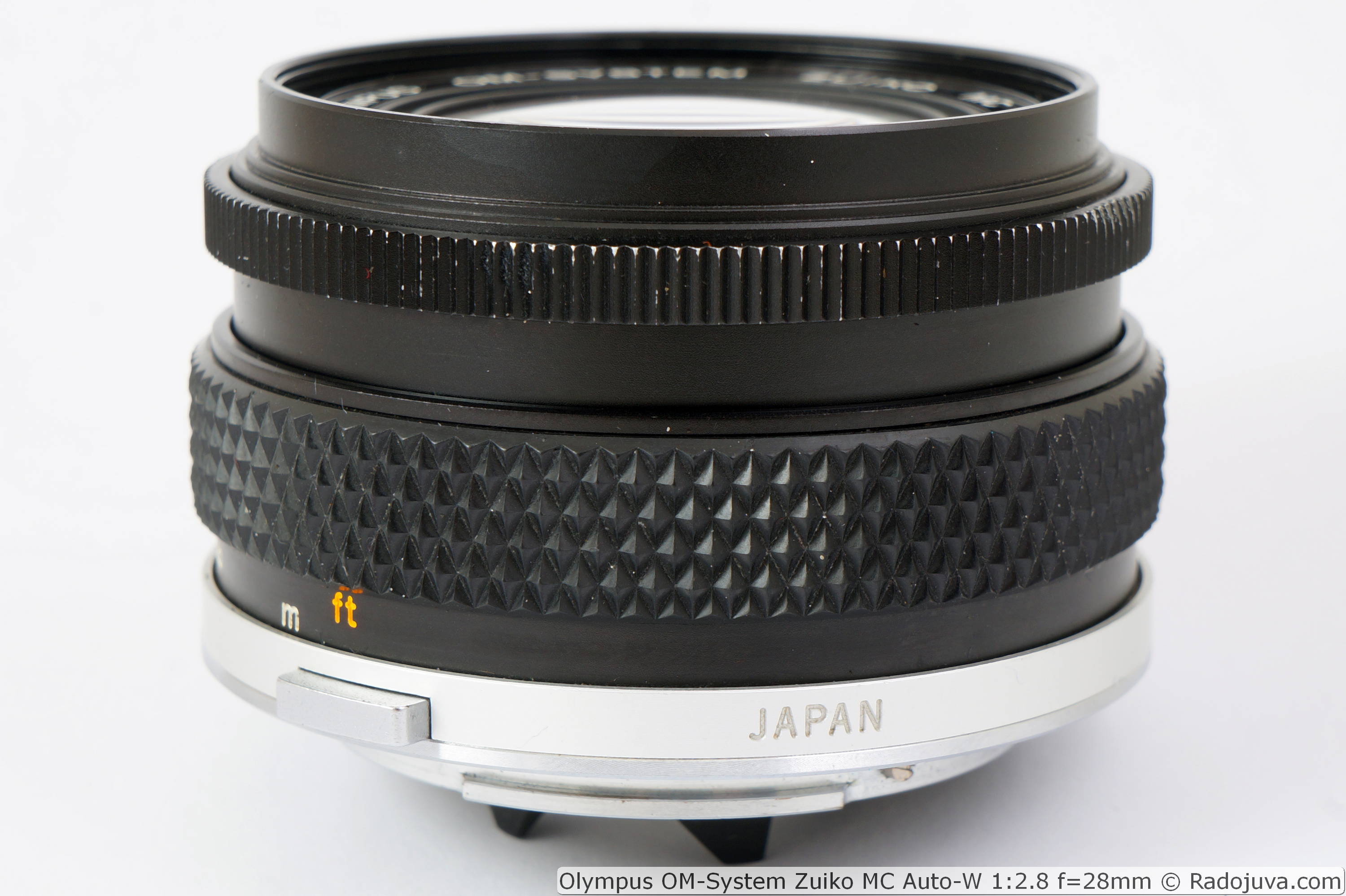
Olympus OM-System Zuiko MC Auto-W 1:2.8 f=28mm
Sample photos (Full Frame)
The photos in the gallery were taken with a Canon EOS 5D (Full Frame, 13 MP), a digital classic, and an Olympus OM to Canon EF adapter . All photos for this review were prepared by Natalia (Instagram) . All photos in this review are shown unprocessed, according to ZERO JPEG principles.







The original JPEG photos can be downloaded/viewed from this link (Google Drive gallery).

Olympus OM-System Zuiko MC Auto-W 1:2.8 f=28mm
Conclusion
Olympus OM-System Zuiko MC Auto-W 1:2.8 f=28mm – high-quality, compact, lightweight. It has some disadvantages typical of inexpensive similar optics.
10 main advantages
- quality assembly
- compact sizes
- light weight
- stylish design
- convenient focusing ring
- low cost in the secondary market
- ease of adaptation to mirrorless systems (and some mirrored ones, like the popular Canon EF)
- multi-illuminated optics
- good resolution at closed apertures
- low distortion
10 main disadvantages
- only 6 aperture blades
- The focus ring moves only 90 degrees (1/4 of a full turn)
- there are no intermediate values for the aperture control ring between pairs of numbers
- a threaded hood must be used (not a bayonet hood)
- normal focusing using simultaneous movement of the entire lens unit (for example, the same year Nikon Nikkor 28mm 1: 2.8 had the Close-Range Correction System function)
- difficulty adapting to some mirror systems
- significant longitudinal and transverse chromatic aberration
- significant vignetting at F/2.8 and focusing at infinity
- significant decrease in resolution at F/2.8 from the center of the frame to the edges and corners of the image
- However, sometimes you can get artifacts from backlight (example)
This material was prepared by Arkady Shapoval . The greatest support for the site is if you use links on this site, such as Amazon , when purchasing anything . It costs you nothing, but for this site, and therefore for my family, it's the main source of support.


Thank you for looking at this old dude. On the Canon EOS 5D, the horns on the bayonet side do not seal the mirror when pressing the “release”? The stench suspected a great size.
XNUMXst paragraph “Important”. About another lens)
Good day,
if you were like that on 5D, nothing mattered
Doesn't catch on
Dyakuyu for vіdpovіd.
On Nikon it is generally very easy to change. you just have to tinker with rearranging the spring that closes the diaphragm.