
The Canon EOS M14 Mark II mirrorless crop camera was announced on October 2020, 50.
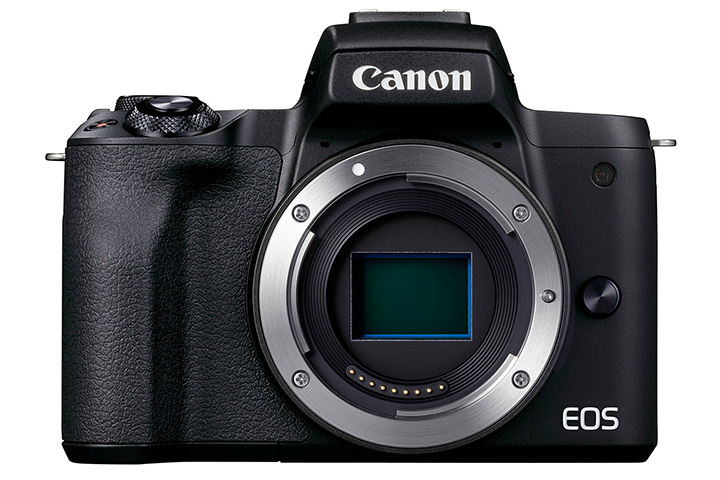
Canon EOS M50 MarkII
Key features include:
- New 24MP APS-C sensor for maximum image size 6000 X 4000
- DIGIC 8 processor
- ISO 100-25.600 expandable to 51.200
- Mechanical shutter with shutter speed up to 1 / 4000 s.
- Focusing with Dual Pixel CMOS AF, 143 zones for stills and 117 zones for movies. Sensitivity from -4 EV
- 10fps maximum burst speed (10 RAW buffer)
- UHD 4K (3840 x 2160) 24p and Full HD 60p, digital stabilization
- SDXC card slot with UHS-I
- EVI 2.360.000 points
- 3 '' swivel touchscreen display with 1.040.000 dots
- Wi-Fi, Bluetooth, NFC
- 3.5 mm microphone, HDMI Micro-D, USB Micro-B 2.0
- Weight: 387 gram
- The price is about $ 600 per body AMAZON
Appearance
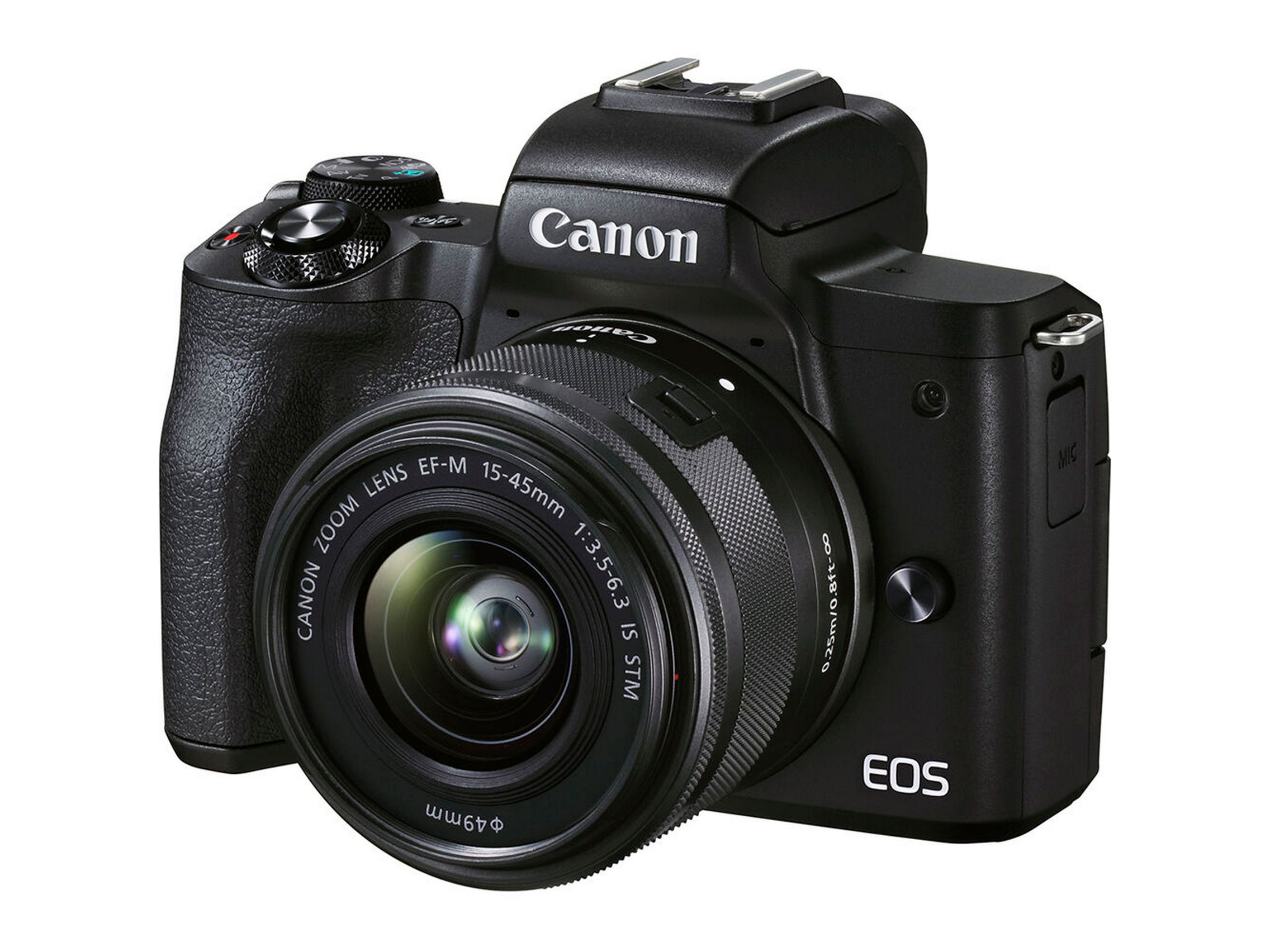
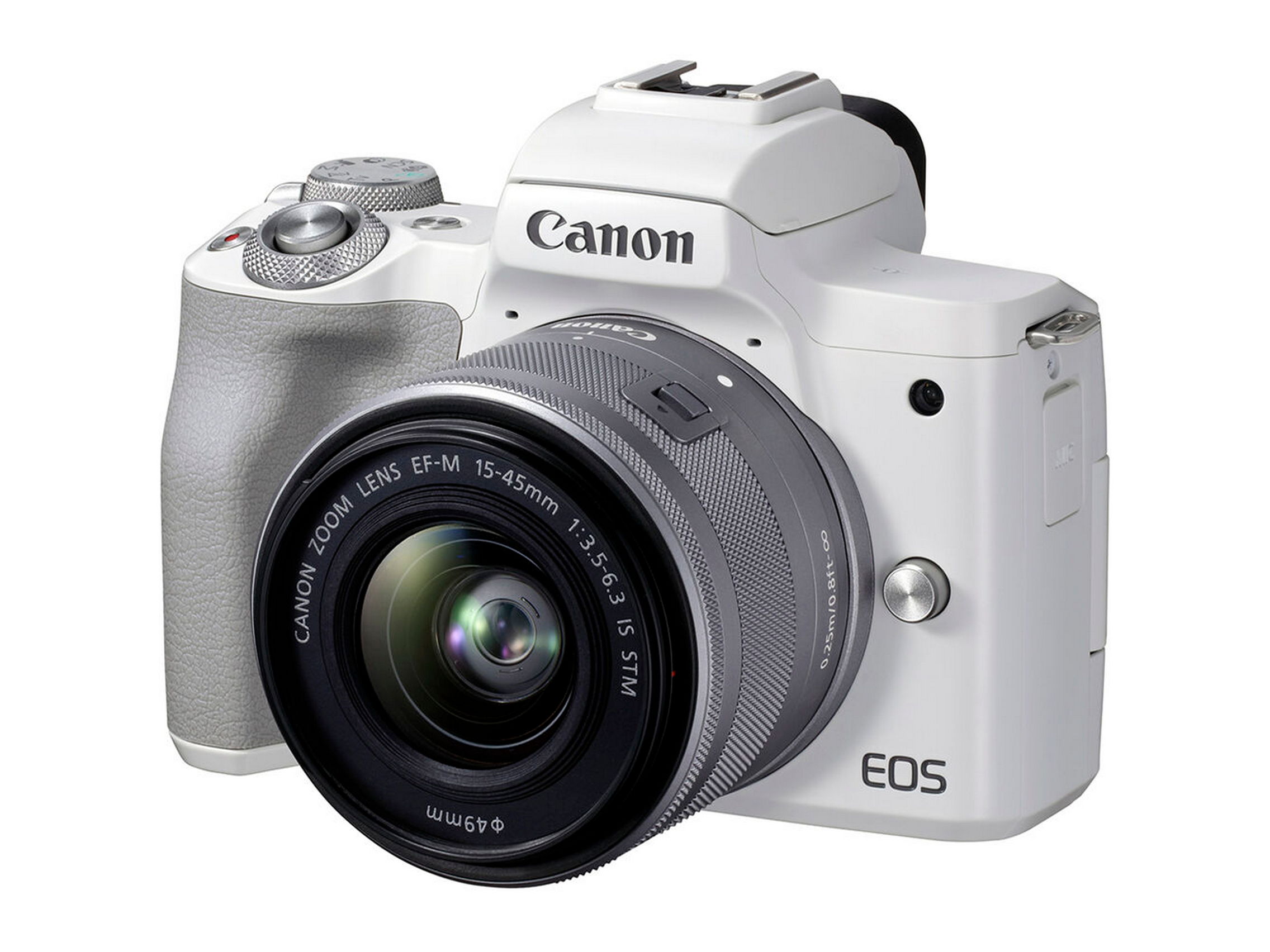
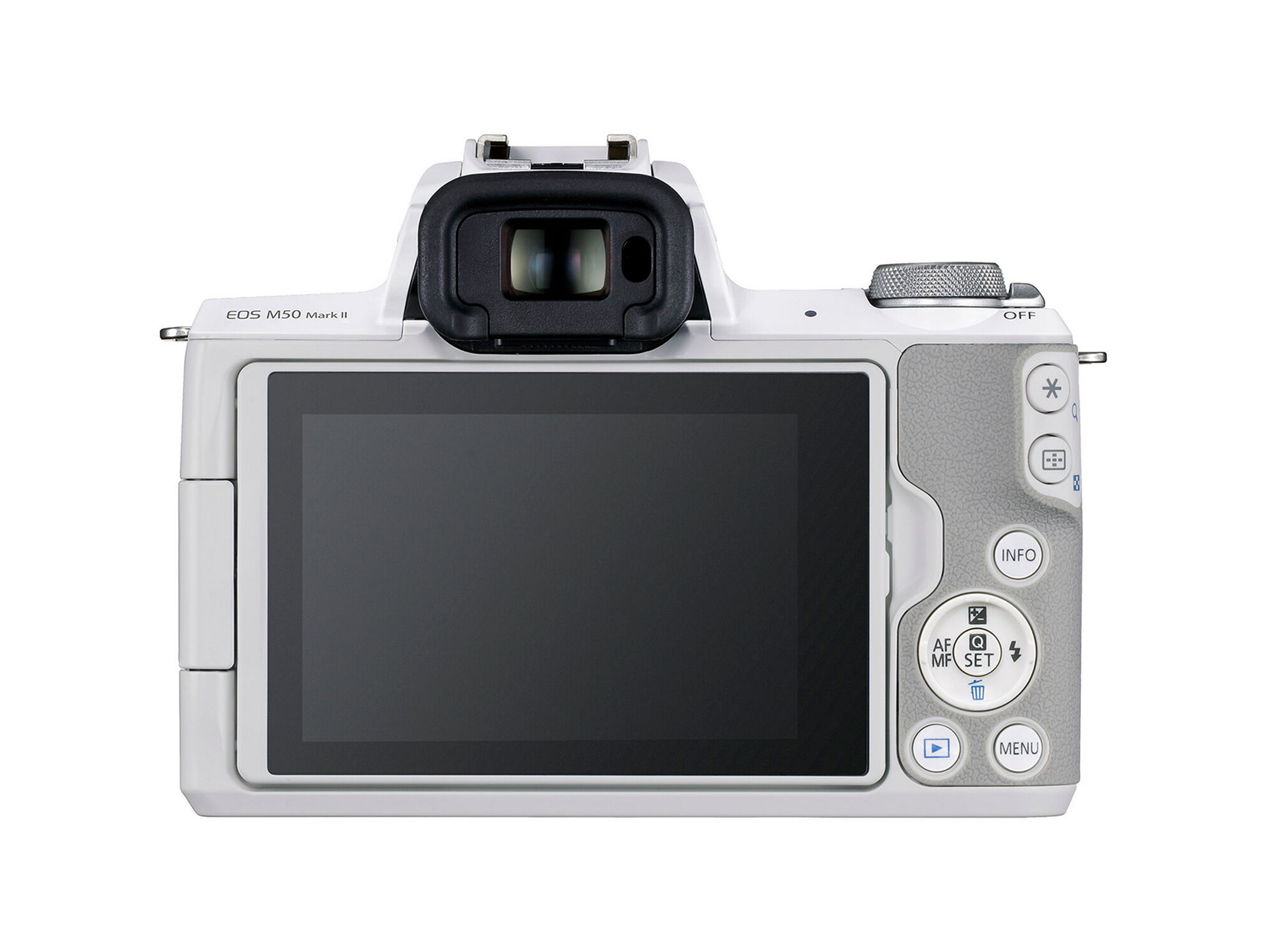
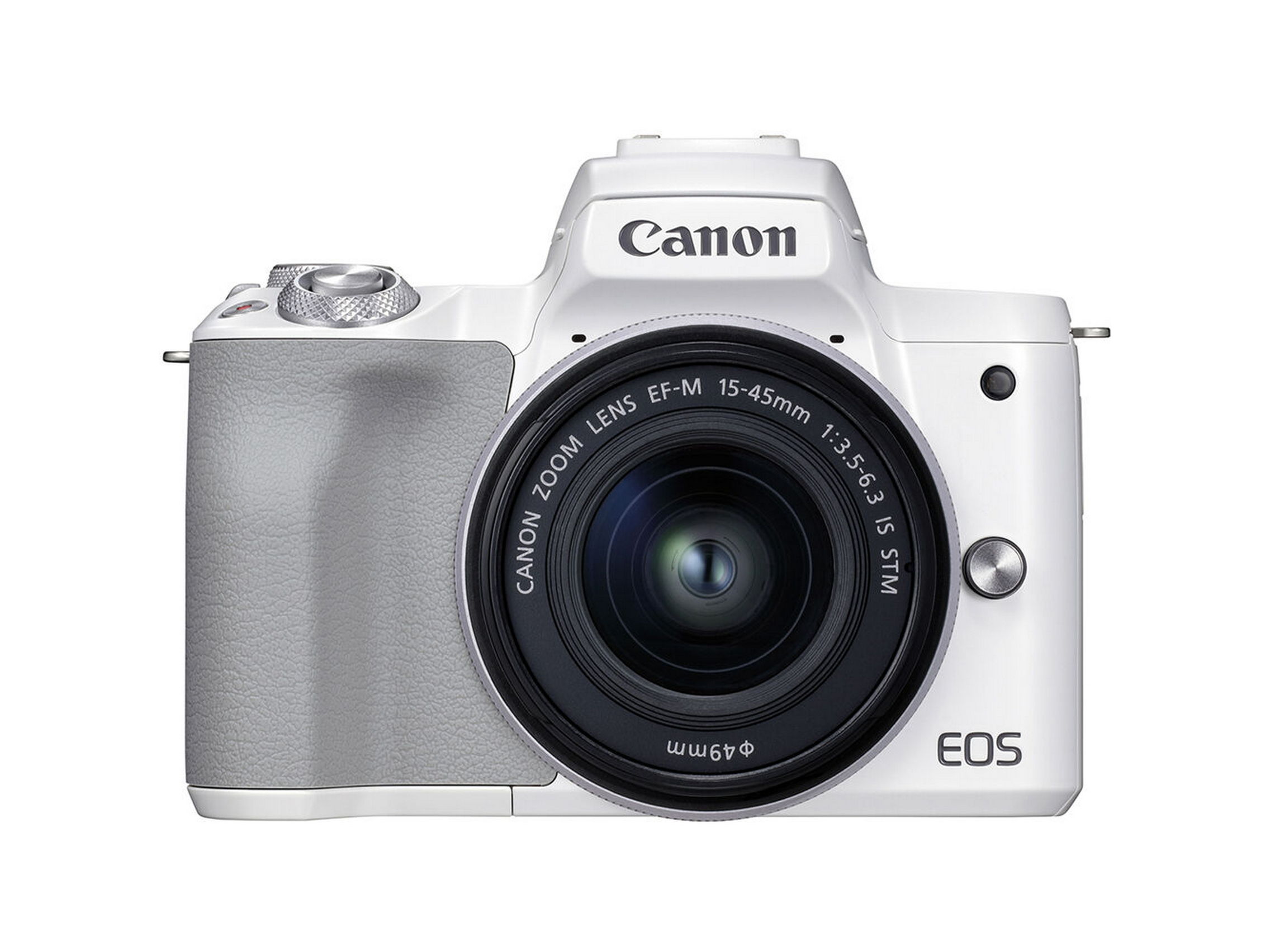
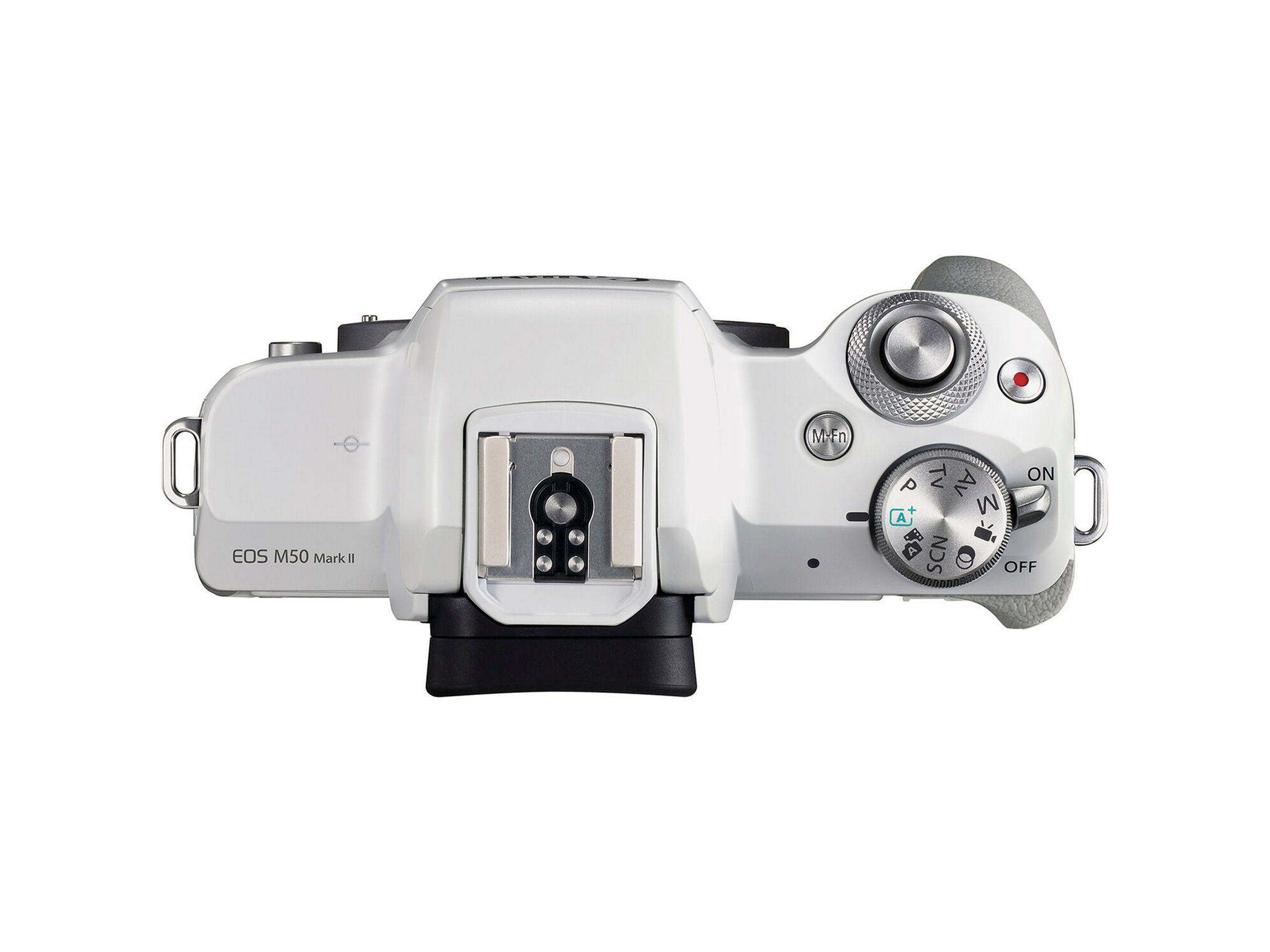
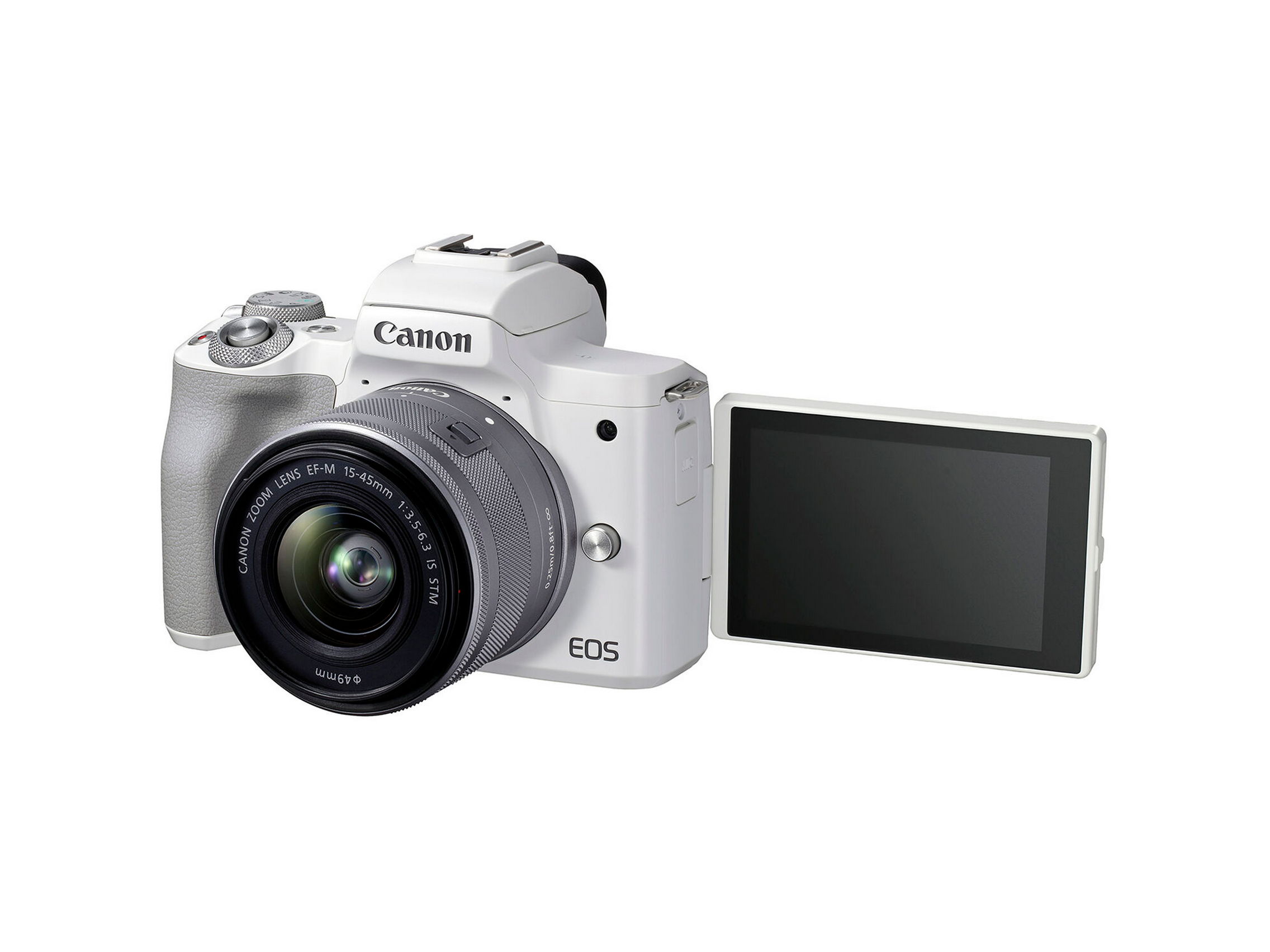
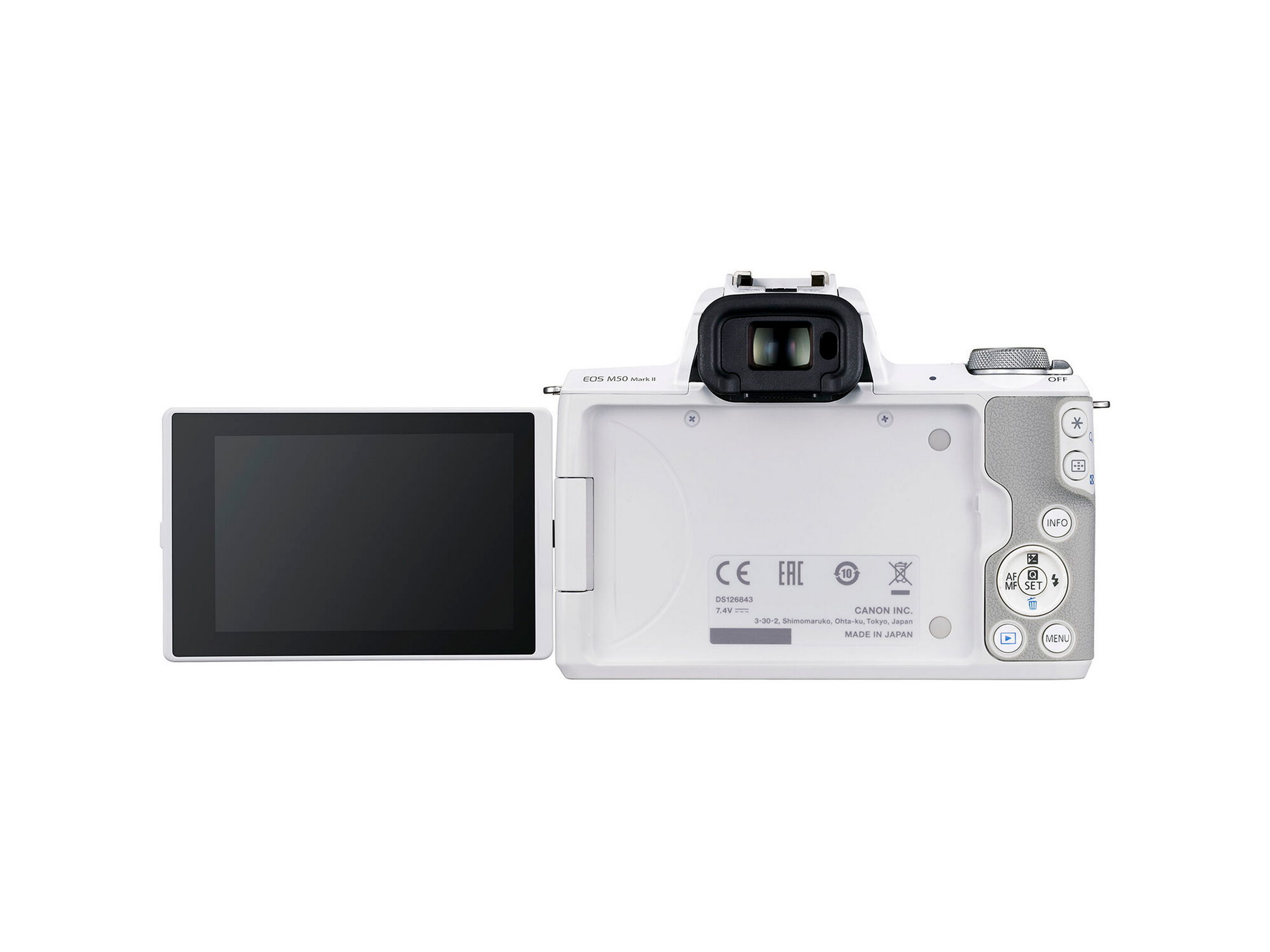
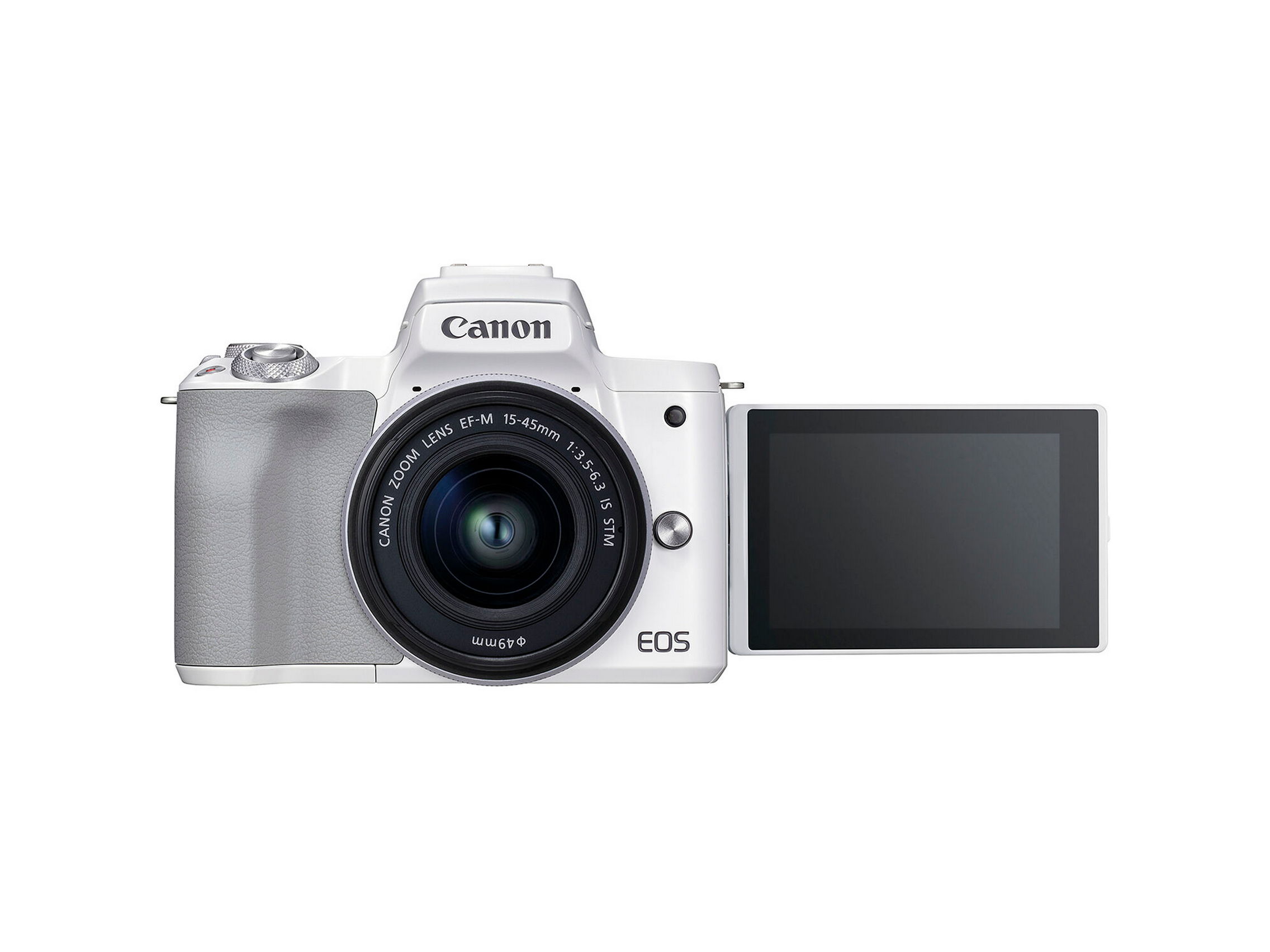
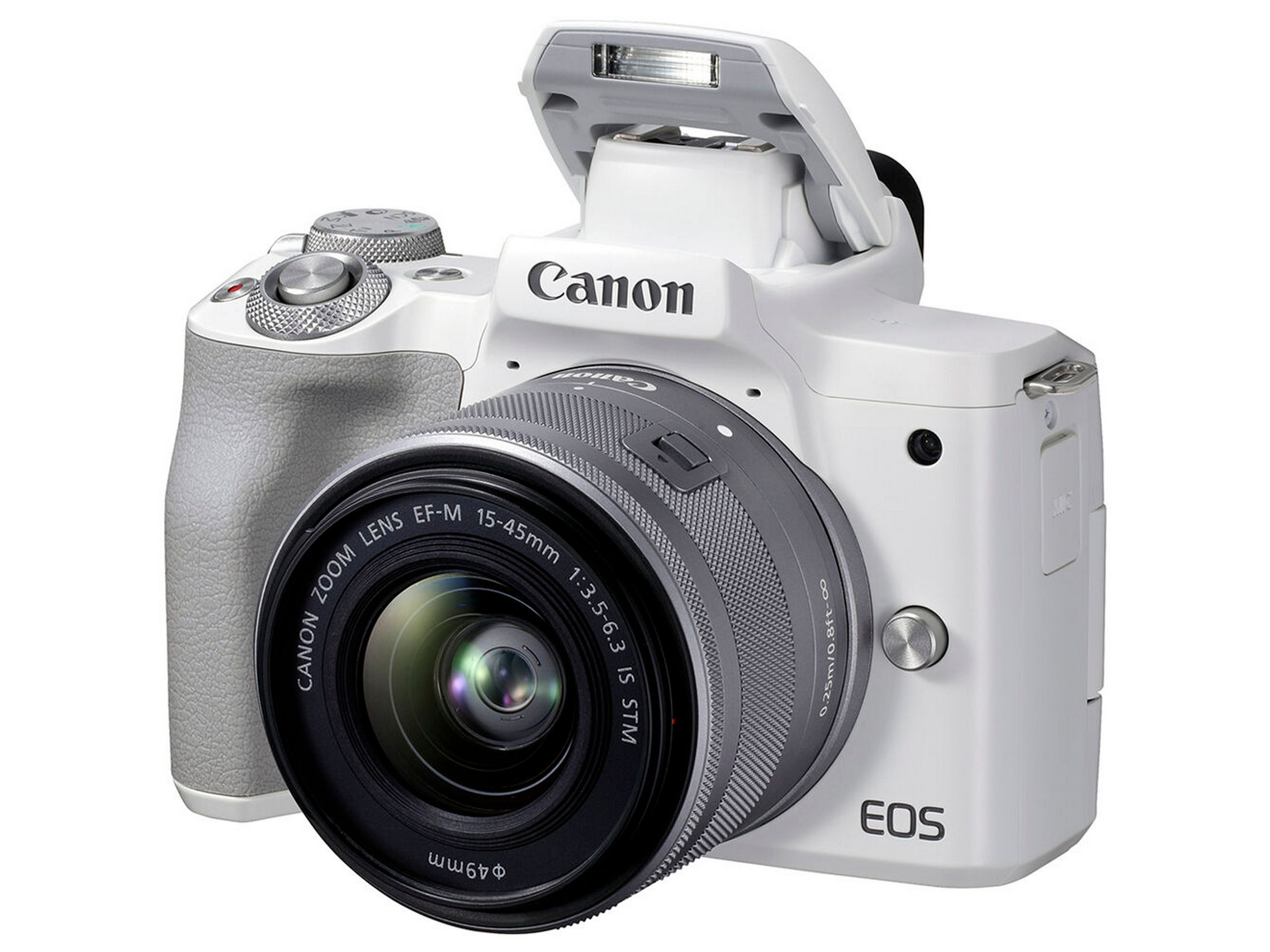
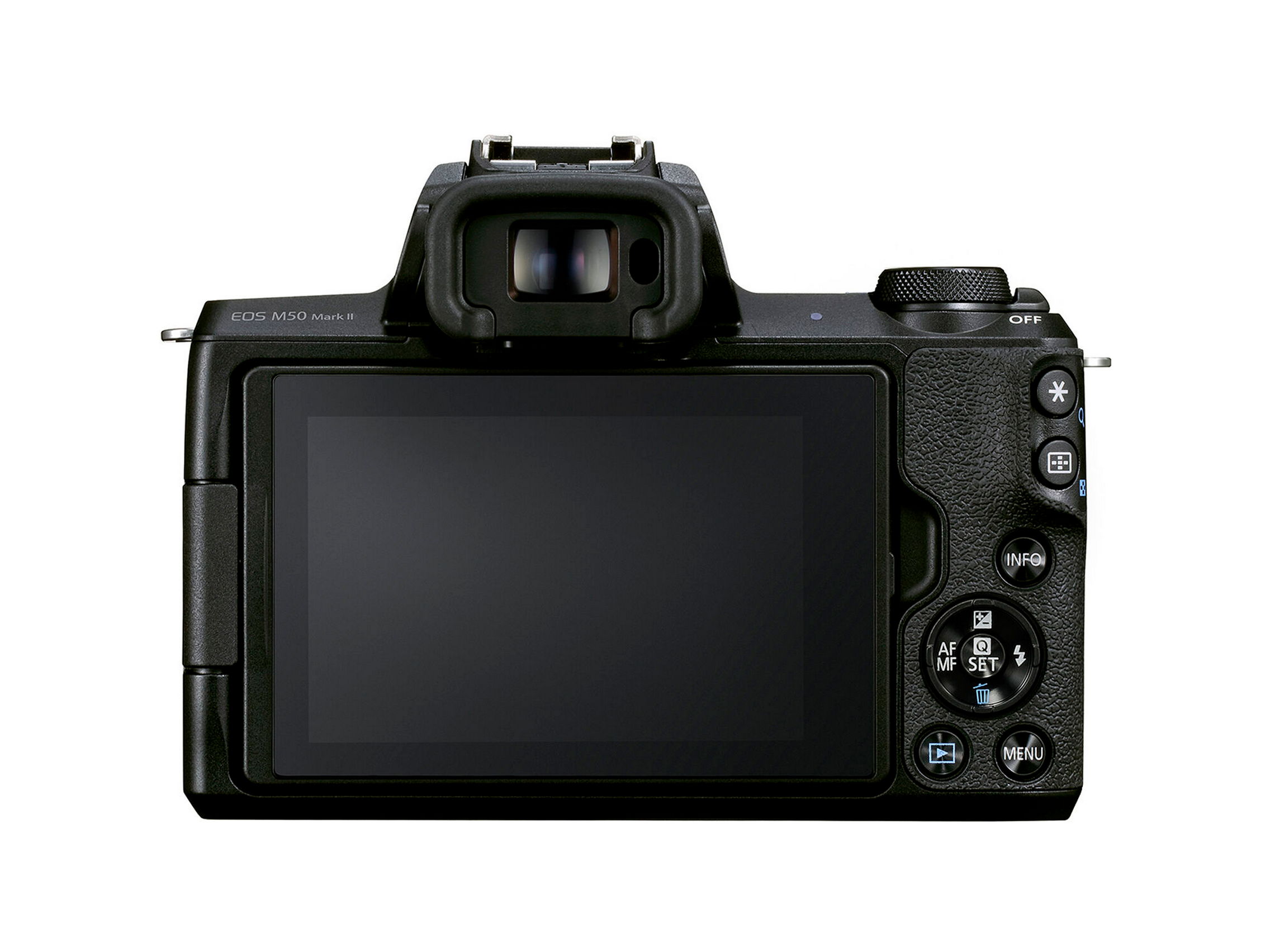
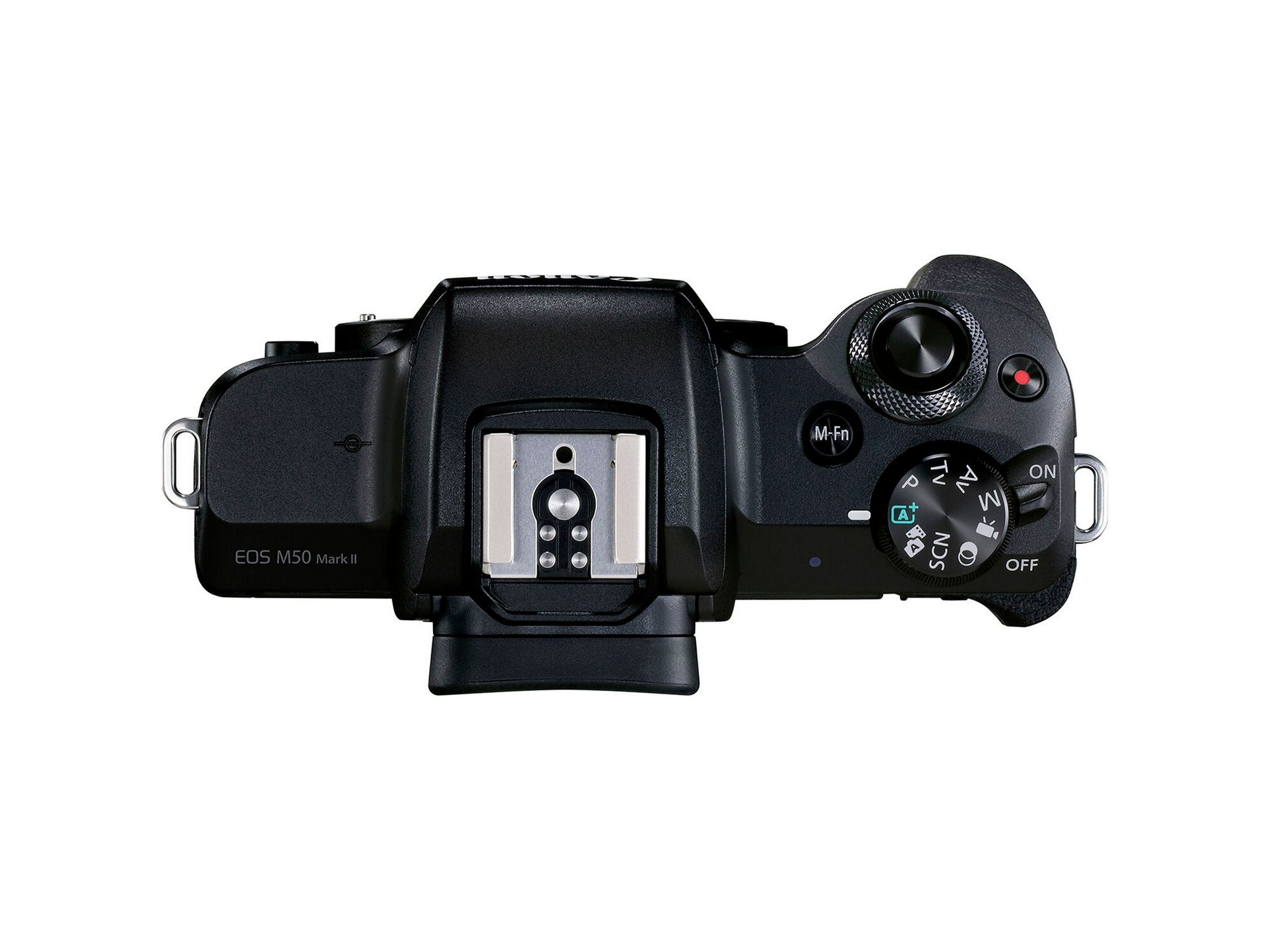
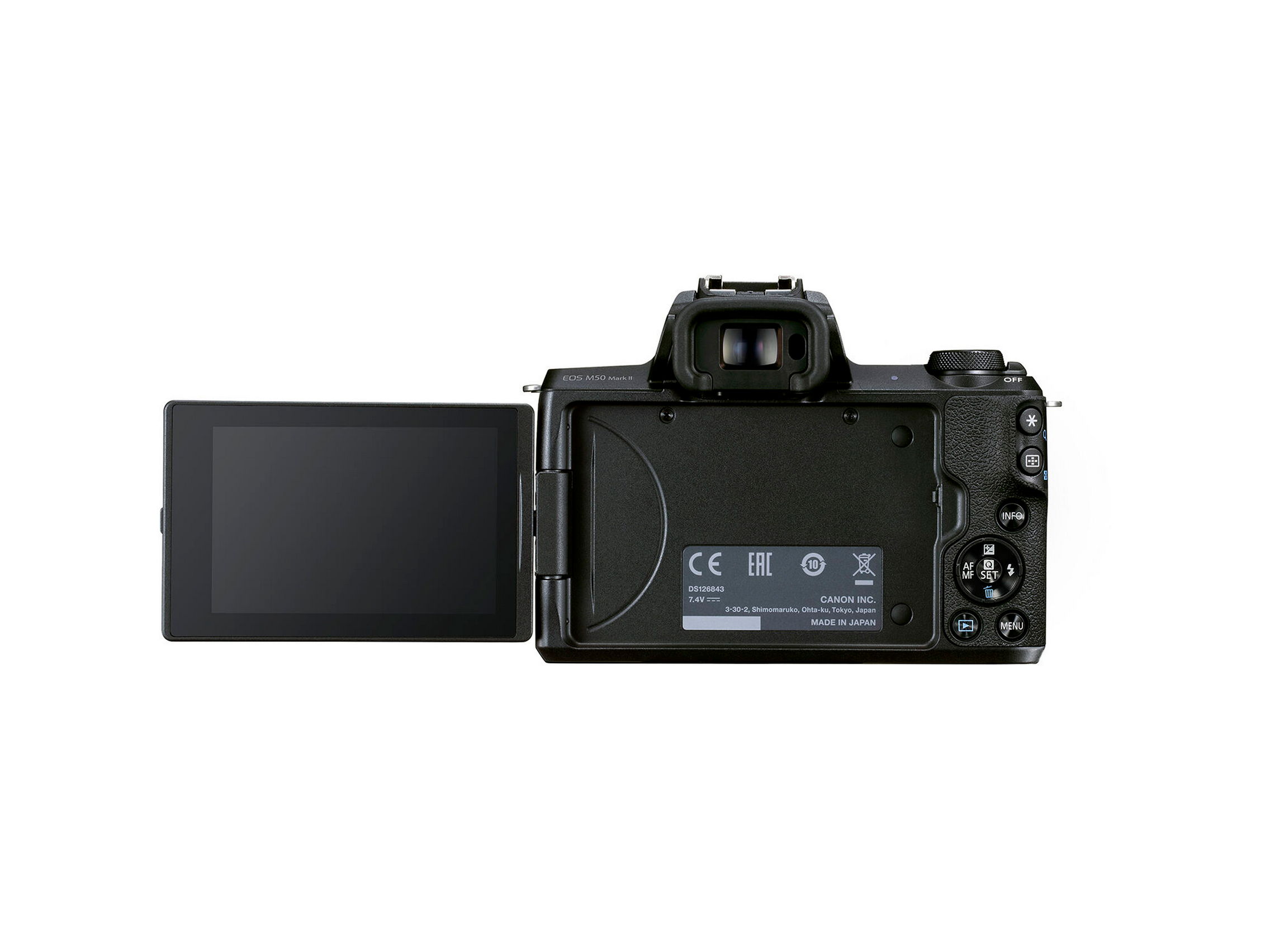
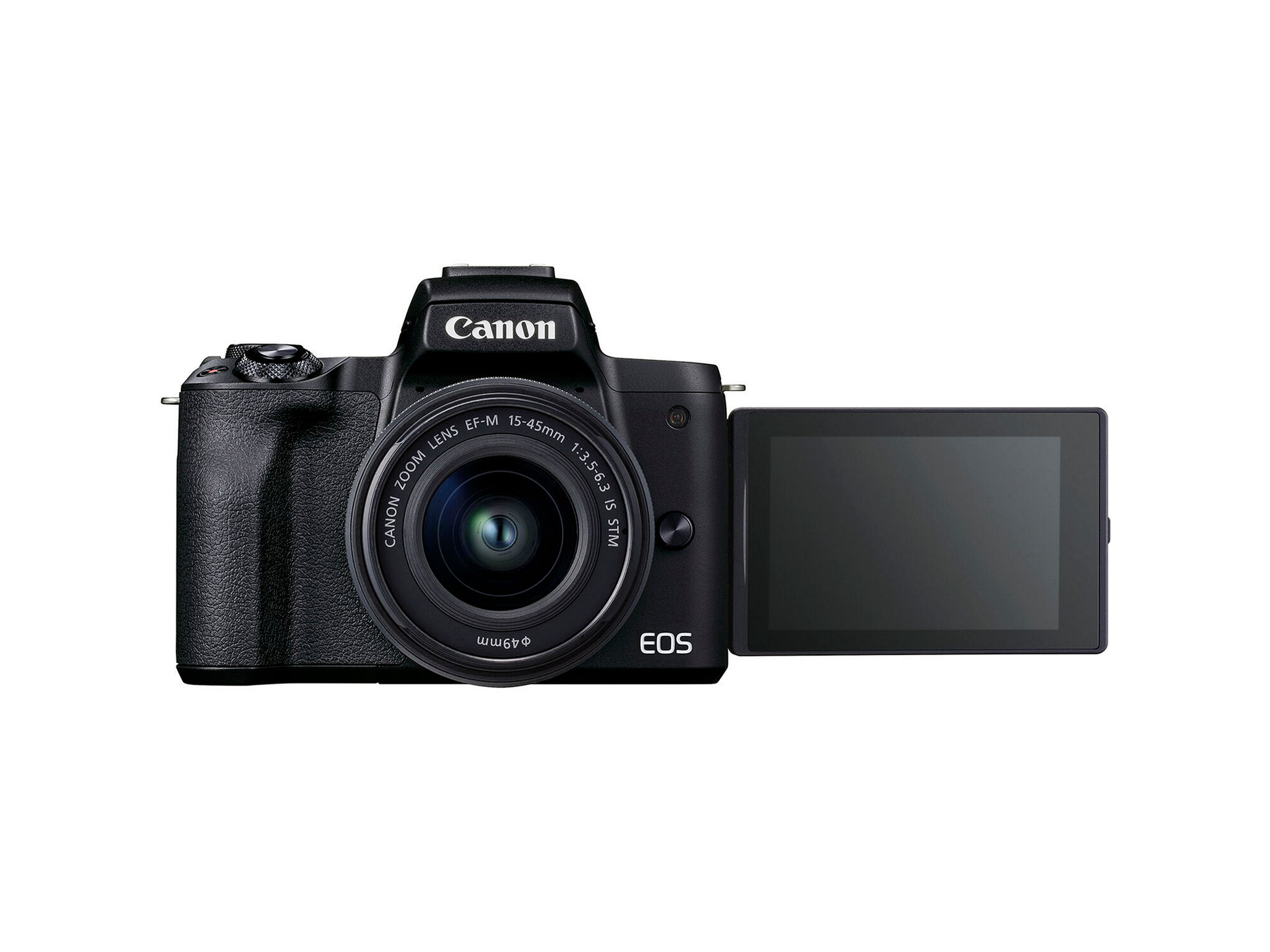
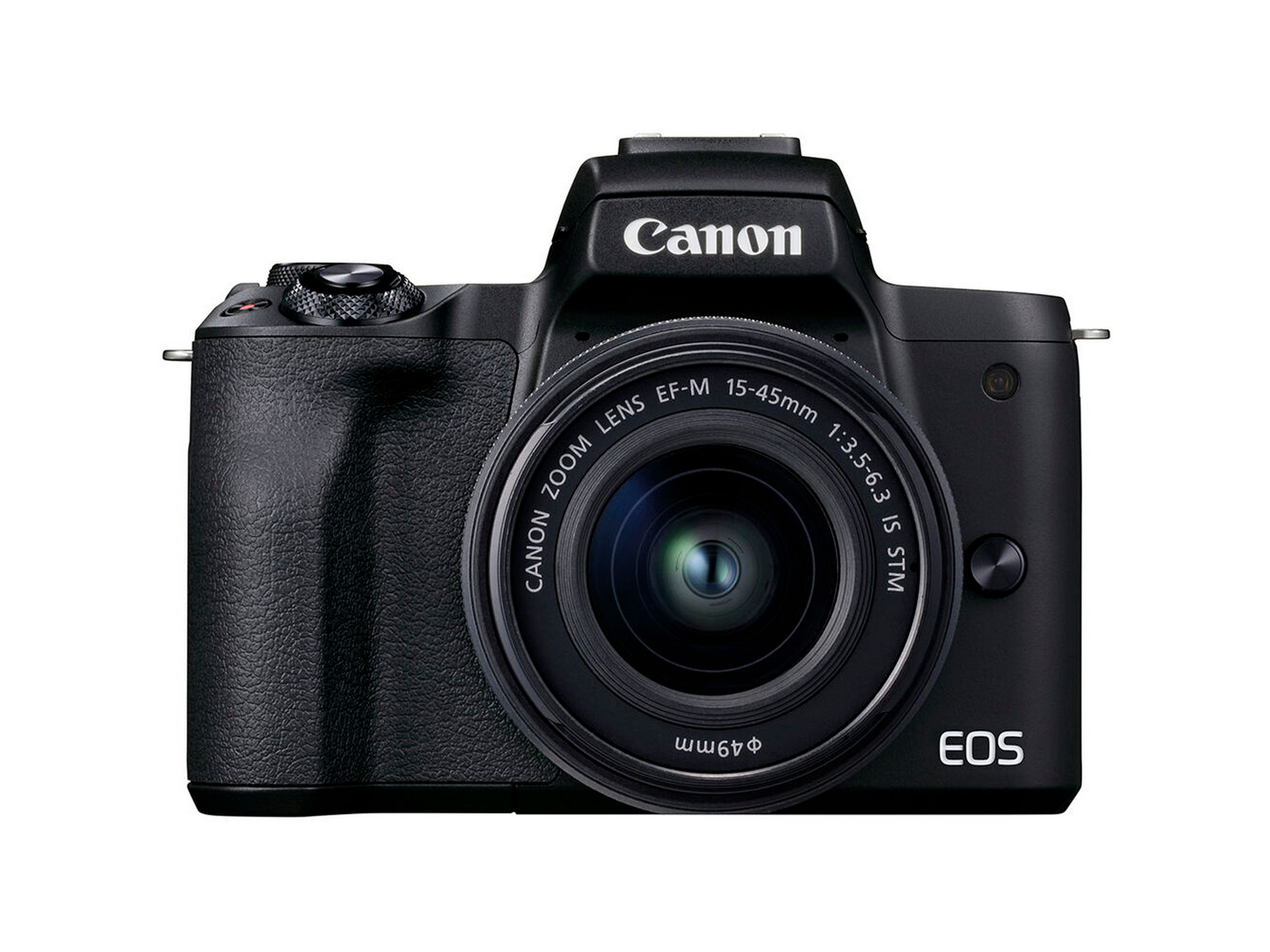
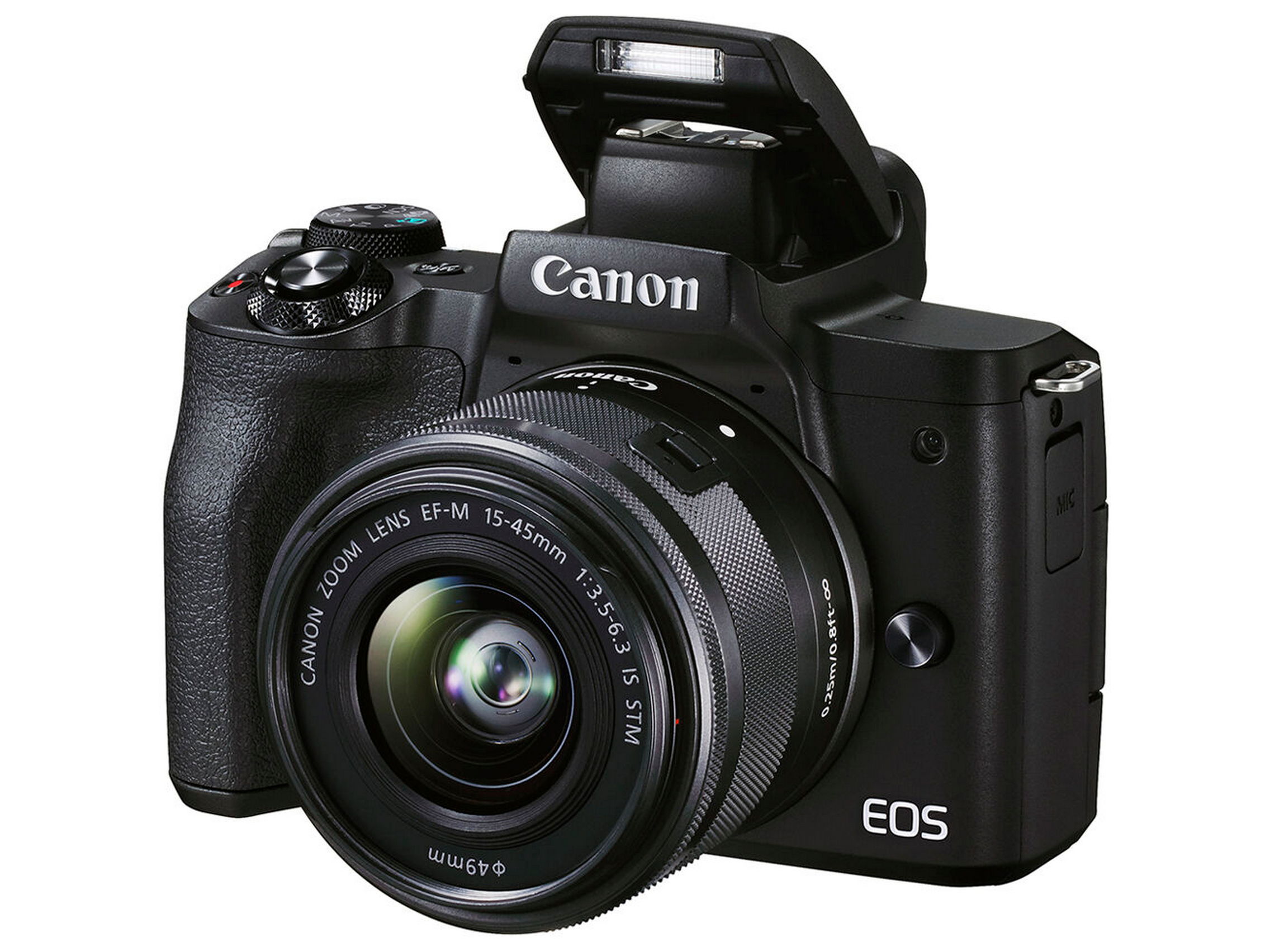
Aimed at vloggers and content creators, the white Canon EOS M50 Mark II is a versatile multimedia camera with extensive photo and video capabilities. Improved focusing, recording, and data transfer systems complement the proven 24,1-megapixel APS-C CMOS sensor and DIGIC 8 image processor, enabling continuous shooting at up to 10 fps, a standard ISO 100–25600 sensitivity range, and UHD 4K video recording at 23,98 fps, as well as Full HD 1080p at 60 fps and HD 720p at 120 fps for slow motion. The Dual Pixel CMOS AF system features faster operation and improved Eye Detection AF. Movie Servo AF supports Eye and Face Detection modes to help keep your subject in focus. Additionally, 5-axis Combination IS helps achieve smooth and stable video recordings by reducing the effects of camera shake.
The M50 Mark II's physical design is also well-suited for content creation. The camera features a large 3,0-inch Vari-Angle LCD screen, allowing for shooting from high and low angles, and the touchscreen interface supports Touch & Drag AF for convenient AF area control. A 2,36-million-dot OLED electronic viewfinder provides high-resolution, eye-level viewing. Built-in Wi-Fi with NFC allows for quick connection to a smartphone or tablet for wireless image transfer, while Bluetooth supports photo transfer and remote camera control from a mobile device. Wireless connectivity also allows the M50 Mark II to be used as a webcam when used with the EOS Webcam Utility software. Content creation capabilities are rounded out by vertical video recording, a video self-timer, touchscreen recording controls, and support for the image.canon cloud service for a more efficient workflow.
24,1MP APS-C CMOS sensor and DIGIC 8 processor
The 24,1-megapixel APS-C CMOS sensor and DIGIC 8 image processor provide high sensitivity and fast performance for both stills and video. An ISO range of 100–25600, expandable to ISO 51200, allows for shooting in a variety of lighting conditions, while the processor's capabilities help reduce noise and enable Auto Backlight Optimizer for sharper images in a variety of shooting conditions.
Supports UHD 4K video recording at 23,98 fps, Full HD 1080p at 60 fps, and HD 720p at 120 fps for slow-motion video. Vertical video recording and clean HDMI output for high-resolution, high-frame-rate streaming are also available. The processor enables continuous shooting at up to 10 fps, fast camera startup, and short intervals between frames, making the shooting process more convenient and efficient.
Improved Dual Pixel CMOS AF system
The Dual Pixel CMOS AF system ensures smooth and fast focusing, similar to video cameras. Each pixel contains two separate photodiodes, creating a wide and dense network of phase-detection autofocus elements across most of the sensor. This reduces the number of focus retry attempts and ensures faster and more precise focus point control.
When shooting photos, the system allows for quick and accurate focusing, which is especially convenient for capturing and tracking moving subjects. The Eye Detection AF feature is designed for portrait photography and helps prioritize focusing on the subject's eyes, ensuring their sharpness.
When recording video, Movie Servo AF mode ensures smooth and natural refocusing as subjects move or change distance. You can also adjust tracking sensitivity, autofocus speed, and face tracking priority. Touch AF allows for smooth refocusing by simply touching the desired subject on the touchscreen. When shooting video, the Dual Pixel CMOS AF system recognizes subjects and maintains focus even when the scene changes or there is a large amount of detail in the frame.
Eye Detection AF also works in Movie Servo AF mode. Eye Detection and Face Detection modes can be used with Servo AF, helping maintain focus on the main subject.
Combination IS
The Combination IS system combines built-in 5-axis digital image stabilization with in-lens stabilization, effectively reducing camera shake and helping to achieve more stable handheld shooting. This is especially useful when recording while walking or moving. The system can also work in conjunction with lenses equipped with optical IS to enhance overall stabilization effectiveness.
Case design and wireless connection
- The large 3,0" touchscreen LCD provides convenient focus point control, menu navigation, and image review. The display features a tilt-adjustable design, allowing for comfortable shooting from high and low angles.
- The built-in OLED electronic viewfinder with 2,36 million dots provides a bright and clear view when shooting at eye level. Touch & Drag AF is also available when using the viewfinder, allowing you to manually move the autofocus area for more convenient control.
- Built-in Wi-Fi with NFC makes it easy to transfer photos and videos wirelessly to a connected mobile device.
- Bluetooth allows you to connect your smartphone or tablet for fast, automatic image transfer and remote camera control.
- Wi-Fi also allows for live streaming of content directly from the camera. Using the EOS Webcam Utility software, the M50 Mark II can function as a webcam.
- A built-in pop-up flash provides additional lighting when shooting in low-light conditions. A hot shoe is also provided for attaching an additional flash. external flash.
EOS WebcamUtility
EOS Webcam Utility software expands the camera's capabilities and turns it into a universal webcam by connecting it to a computer via USB. The program is compatible with various video conferencing and streaming applications, including ZOOM, YouTube Live, Microsoft Teams, and others. The camera retains the ability to record internally during live streaming.
List of all Canon EF-M mount cameras
- Canon EOS M [AMAZON]
- Canon EOS M2 [AMAZON]
- Canon EOS M3 [AMAZON]
- Canon EOS M5 [AMAZON]
- Canon EOS M6 [AMAZON]
- Canon EOS M6 MarkII [AMAZON]
- Canon EOS M10 [AMAZON]
- Canon EOS M50 [AMAZON]
- Canon EOS M50 MarkII [AMAZON]
- Canon EOS M100 [AMAZON]
- Canon EOS M200 [AMAZON]
An accurate list of all Canon EF-M lenses
Fix Lenses:
- Canon Lens EF-M 22 mm 1:2 STM [2012] AMAZON
- Canon Lens EF-M 28 mm 1:3.5 Macro IS STM [2016] AMAZON
- Canon Lens EF-M 32 mm 1:1.4 STM [2018] AMAZON
Wide angle lenses:
Universal Lenses:
- Canon Zoom Lens EF-M 15-45mm 1: 3.5-6.3 IS STM [2015] AMAZON
- Canon Zoom Lens EF-M 18-55mm 1: 3.5-5.6 IS STM [2012] AMAZON
- Canon Zoom Lens EF-M 18-150mm 1: 3.5-6.3 IS STM [2016] AMAZON
Telephoto Lenses:
Important: using the Canon mount adapter EF-EOS M, you can mount any Canon EF , Canon EF-S lenses on cameras with an EF-M bayonet mount.
+ autofocus lenses from Sigma , Viltrox and Tamron :
- Sigma 16 / 1.4 [AMAZON]
- Sigma 30 / 1.4 [AMAZON]
- Sigma 56 / 1.4 [AMAZON]
- Viltrox 23 / 1.4 [AMAZON]
- Viltrox 33 / 1.4 [AMAZON]
- Viltrox 56 / 1.4 [AMAZON]
- Tamron 18-200 / 3.5-6.3 [AMAZON]
Materials on the topic
- Full frame mirrorless systems... Discussion, choice, recommendations.
- Cropped mirrorless systems... Discussion, choice, recommendations.
- Cropped mirrorless systems that have stopped or are no longer developing
- Digital SLR systems that have stopped or are no longer developing
- JVI or EVI (an important article that answers the question 'DSLR or mirrorless')
- About mirrorless batteries
- Simple and clear medium format
- High-speed solutions from Chinese brands
- All fastest autofocus zoom lenses
- All fastest AF prime lenses
- Mirrored full frame on mirrorless medium format
- Autofocus Speed Boosters
- One lens to rule the world
- The impact of smartphones on the photography market
- What's next (smartphone supremacy)?
- All announcements and novelties of lenses and cameras
This material was prepared by Arkady Shapoval . The greatest support for the site is if you use links on this site, such as Amazon , when purchasing anything . It costs you nothing, but for this site, and therefore for my family, it's the main source of support.

What's happening? Why do they have two mirrorless systems with incompatible mounts?
They are afraid of offending users by rejecting the old one. Not ready to release more or less cheap APS-C on RF ...
Yes, a normal decision in fact. It allows you to make lenses with weight and dimensions more adequate to the frame size than the previously prevailing scheme - one healthy bayonet for 2-3 different frame sizes. Another question is of course where are these lenses? Who needs these cut-down crop of carcasses if there is nothing to put on them from their native optics?
As a result, you can't put on RF from M and vice versa. Here EF and EF-S are very convenient.
If Canon paid as much attention to this system as to the main full-frame systems, then everything that you describe in terms of taking a lens of system A and putting it on the carcass of system B would simply not be necessary. But seeing how everything actually works out, I suppose over time they will still cover this system and will crop on RF, tk. it is corny less expensive than fully working on two systems.
Rumor has it that EF-M will be closed
It’s very interesting how they will eventually act in the coming years: they will crop RF and close M, or they will pretend that these are non-intersecting worlds and everything is fine. In general, the decision to make RF was strange. If they reconsidered their needs, for example, a more advanced interaction of the lens with the camera was required, then M could be expanded with new contacts. But apparently the engineers know better. In turn, instantly killing M after the release of RF would be foolish, given the wild popularity of the same M50.
Canon's EOS M line of cameras to be closed by 2022
https://photar.ru/linejka-kamer-canon-eos-m-budet-zakryta-k-2022-godu/
According to information from several sources at once, Canon will soon close the EOS M (compact mirrorless cameras) system.
The source connects this situation with the development of a new RF-mount system. One of the reasons may be the possible release of the first APS-C camera on this mount from Canon.
At the same time, the source made the assumption that this situation is not entirely logical for such a conservative company as Canon. Perhaps the objective reason for changing the concept of development of this line (EF-M) was the need to reduce costs.
It is also noted that the Japanese manufacturer wants to fully focus on the development of the line of optics and
cameras with a new mount. Competition with your own third-party ruler in this case is unacceptable.
Canon EOS R7 will receive a matrix with a resolution of 32,5 megapixels
https://photar.ru/novaya-informaciya-ob-canon-eos-r7/
*
and more news:
Canon testing prototype mirrorless camera with APS-H sensor
It would be correct to separate the concept of "news" from "rumors".
There have been rumors about the "closure" of the ef-m since 2018, if that.
>> https://photar.ru/novaya-informaciya-ob-canon-eos-r7/
Facepam is just some kind of, "approximate view" of the future crop of the camera turned out to be with a full-frame sensor)))
In the source, however, they realized the mistake and quickly replaced the render with the one corresponding to the topic of discussion, and left the photo as it is - “it will do well”))
I hope you are not serious about discussing "news" from similar sources?))
Photar simply repost rumors from photorumors and other similar sites in free translation
It seems to me that even the release of the cropped R7 will not change anything in this situation, since it will be focused on sports / wildlife reporting, and most likely Canon will not even bother with the release of cropped or just budget optics - they say they don't need a wide angle anyway. But if there are rumors (or better announcements) about budget RF-cameras, then that's it.
The M system has been at its peak in recent years, and there is no line of optics for it - people hawk, so the moment has not come yet. And they can save a lot of resources by focusing on RF fullframes and updating M. to a minimum. So I personally go today to pick up the M50 II to replace the old 550D :)
Maybe I didn't notice ... but what is the difference from the first version?
well, the price is the same0))
Something different sources are different, but I did not find the original source ... But in some places they write that autofocus is improved (in the eyes in the video, but only FullHD), and besides, FullHD 120fps (and according to other sources, 60fps ...)
No, 120fps is only HD, and we've added electronic video stabilization. Of course, on paper, it's "improved." A good source for specifications is, for example, here.
OK, thanks. For some reason I couldn't find the right page from the main Canon.
It seems that after all, they only updated the firmware there ...
The electronic stub was also in the first version. Even the simplest m100 has
When Canon finally begins to massively use electronic shutters in cameras, what kind of chaos?
Fuja was still in x-t1, which came out six years ago.
a global electronic shutter is very expensive to make. almost double the number of transistors on the matrix.
It may not be global, many do it
if it is not global, then a second curtain is required. well, or get a Rolling shutter
We get a rolling shutter only with a fast moving lens. Most of them remove static, where a speaker is needed, you can turn on a regular shutter.
Lens = Objects.
Technically, there are no obstacles to this, I suppose Canon misses this useful function so that there is something to offer in future models))) Calculated.
For many scenes it is not very important, today the new FUJIFILM X-S10 came out , it has a fully electronic shutter with 1/32,000 or the first electronic one, also with 1/32,000 and no one worries about the rolling shutter.
In many new cameras, its influence is minimized, thanks to the greatly increased readout speed from the sensor, so it is quite possible to do without the global one, given that (I repeat) most amateur shots are flowers, cats, portraits and landscapes, where the Rollshatter is not remember.
It's just good when you have a choice. If you want - the mechanics turned on, if you want - purely electronic. I personally would not want to waste the shutter resource on any projectile, and lovers of time lapses and multi-frame panoramas will clearly not mind such a useful feature.