
Thanks to the Paparazzi chain of stores for the opportunity to review the Nikon D5200 body camera, where you can purchase this camera and other photographic equipment - http://www.fotomagazinpaparazzi.ua
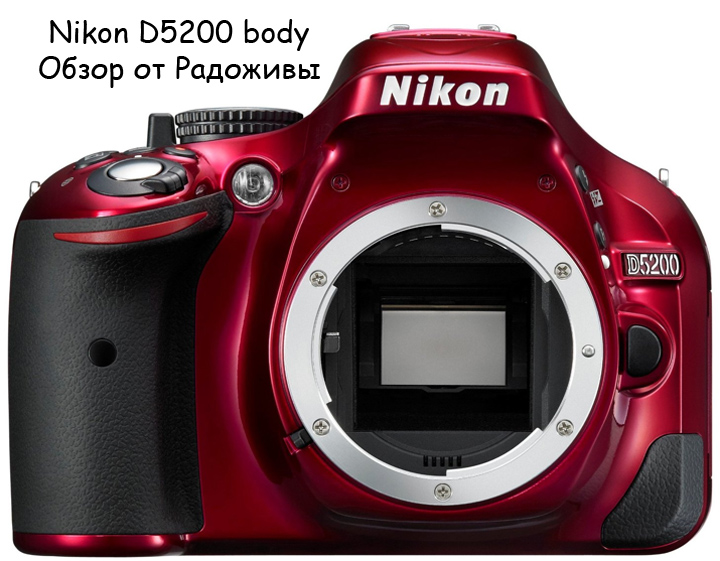
Nikon D5200 review
The Nikon D5200 is a very good amateur camera from Nikon. As of spring 2013, the Nikon D5200 is the best amateur Nikon DX camera . This review features only the Nikon D5200 body (without a specific lens). The Nikon D5200 is usually sold with a kit lens like this one— the Nikon 18-55mm f/3.5-5.6G VR AF-S DX Nikkor —a kit lens.

Nikon D5200 can be found in 3 different colors
Matrix
The Nikon D5200 uses a new 24MP sensor, which allows it to capture 6000 x 4000 pixel images (exactly 24MP). The D5200 and D7100 likely use the same sensor; details are available here . I don't recommend paying too much attention to the megapixel count; you can read about the reasons here.

The 24-megapixel matrix allows you to crop (cut out parts of the image) on a computer without a strong loss in quality. The photo shows the crop (clipping) from the original image to get a larger bee in the photo.
Importantly, the Nikon D5200 supports ISO 100-6400 . This range can be expanded to ISO HI2, equivalent to ISO 25.600 . The camera's bloated ISO HI1 and HI2 modes are more for show than for practical use. You can set the ISO in 1/3-stop increments, meaning you can set values like ISO 320, 640, 2500, and so on. The Nikon D5200 performs well in low-light conditions. It's a shame the ISO 6400 threshold hasn't been raised in the new Nikon D5200.

A picture with automatic ISO control, the camera decided to shoot at a value of 110
The Nikon D5200 performs well in Auto ISO mode —it can automatically select the maximum shutter speed for each individual lens. For example, for a 70mm lens, the camera sets the shutter speed limit to 1/125 of a second (the middle position of the slider when selecting the shutter speed in Auto ISO mode). The automatic shutter speed can be adjusted to a maximum of 5 stops, or shorter or longer. You can also set a range of ISO values, such as 320 to 6400. It's nice that the maximum shutter speed for Auto ISO can be set from 1 second to 1/2000 of a second, which is important when using telephoto lenses. You can also set Hi1 and Hi2 as the maximum ISO value in Auto ISO mode. You can read about the purpose of Auto ISO and how it works here . Overall, Auto ISO is very well implemented, allowing you to easily capture shake-free images, for example, when shooting handheld. Please note: As with many other Nikon cameras, ISO control is only available in P, A, S, M shooting modes.

The D5100 and D5200 are very similar to each other.
Focus, exposure metering
Finally, after a long delay, the new Multi-CAM 4800DX focusing module from the more advanced Nikon D7000 model has been installed in the amateur line of cameras . The number of focus points is 39, 9 of which are cross-type. The Nikon D600 uses the same number of focus points . I recommend reading more about the differences in focusing systems here , and about focusing settings here . Previously, the amateur-level Nikon D3000 , D3100 , D5000, D5100 , D3200 cameras had a focusing system with 11 points or even worse, with 5 ( Nikon D50 ) or 3 points ( D40 , D40x , D60 ). The Nikon D5200, with its 39 focus points, became a new breakthrough.
The focusing system can be used in a wide range of modes :
- You can choose either 39 focus points or the usual 11
- You can turn on the electronic rangefinder, which will prompt in manual focus mode where to rotate the focus ring of the lens.
- You can choose a bunch of different modes of the focus system, from focusing on a single point, to 3D tracking an object in the frame. All modes are illustrated with relevant examples, a beginner will not be able to get confused in the web of the menu :)
- In Live View, you can choose from 4 types of focusing system: 1 - Face-priority AF, 2 - Wide-area AF, 3 - Normal-area AF, 4 - Subject-tracking AF.
- You can select the priority of the focus mode for AF-C... In priority 'release' mode, the camera obediently takes pictures in any situation.
Exposure is measured using a 2016-pixel RGB sensor . Since the release of the Nikon D50 in 2005, Nikon has used 420-segment metering on its amateur cameras for eight years . The new Nikon D5200 has also made a breakthrough in this regard, taking Nikon amateur cameras to a new level. Autofocus is closely linked to the metering sensor , which can recognize the scene being photographed and improve autofocus. This same sensor is used in such advanced cameras as the Nikon D600 , D7100 , and D7000.
By the way, the camera uses a pentamirror optical viewfinder with 95% field of view coverage and 0.78x magnification.

Nikon D5200 with optional external microphone
Photography Speed Buffer
The Nikon D5200 is Nikon's fastest entry-level camera, capable of shooting at 5 fps . Performance is almost on par with that of the Nikon D3x. 5 fps is a very impressive figure. For example, the Nikon D7100's native frame rate is 6 fps, while its predecessor, the Nikon D5100, could shoot at 4 fps. The camera is equipped with the Expeed 3 processor, the same as the Nikon D7100 , D600 , D800 , D800E, and the Nikon D4 . I found it surprising that the Nikon D5200, an entry-level camera, was equipped with the same image processing system as the flagship Nikon D4 . This ensures that the Nikon D5200 handles all settings very smoothly and without any lag.

Example photo on Nikon D5200 and high ISO
JPEG L Fine files average 8 to 15 MB. RAW files average 30 MB . For larger files, invest in larger memory cards. The Nikon D5200 uses SD (HC, XC, UHS-I) memory cards . The Nikon D5200 uses NEF (RAW) files with 14-bit color depth.
The buffer contains:
- 3 JPEG pictures in L size, Fine quality with all advanced settings enabled. In fact, the camera takes 4-5 pictures until it starts to slow down.
- 11 JPEG pictures in L size, Fine quality with all advanced settings turned off.
- 7 shots in RAW with all advanced settings turned off.
- only 2 pictures in RAW or RAW + JPEG with all advanced settings enabled.
Seven RAW shots isn't enough; at 5 fps, the buffer lasts less than two seconds of continuous shooting. Incidentally, I noticed one interesting quirk : when using lenses without a focus motor on the Nikon D5200, the 'Auto Distortion Control' feature doesn't work.

Nikon D5200 with Nikon 18-105VR lens
Display. Video.
The Nikon D5200 features a large, 3-inch , 921.000-dot, articulating display. The display is the same as the Nikon D5100 . You can view photos and videos via HDMI using a Type-C HDMI cable. The cable is not included in the box.
The camera supports 1920 x 1080 60i video, recorded in H.264/MPEG-4 format as .MOV files. Note: to shoot in 60i, you need to set the menu to NTSC mode. I spent an hour trying to find 60i, as only 50i is available in PAL mode.
Those who don't need a ton of large video files can use lower image quality – 1280 x 720 or 640 x 424. You can choose between high and normal video quality. The Nikon D5200 already has a built-in stereo microphone . AF-F mode provides continuous focus tracking when shooting video . AF-F mode must be set using the 'I' button while Live View is enabled. Focusing performance during video recording is poor – a common problem with DSLR cameras. To record video, you need to enable Live View using the dedicated lever, and only then press the red button to start recording. You can't immediately start recording with a single button press.

Example photo on Nikon D5200
If you enable manual video settings, you can shoot video in manual 'M' mode with manual shutter speed and ISO control. Shutter speed can be set from 1/60 (or 1/30) to 1/4000 of a second. While recording, you can instantly change the ISO value; programming the Fn button to control ISO is very convenient. It's convenient to shoot video in manual mode with Auto ISO enabled. Note: You cannot change the aperture value during video recording.
Now here's something that really irritates me when shooting video at 60i or 50i quality. When you start recording video, the camera applies a slight crop. For example, if you want to shoot video with a 10mm lens, you'll run into trouble. The camera simply switches to its own crop mode. This is similar to the 1.3x shooting mode on the Nikon D7100 , but it's unclear what cropping the Nikon D5200 uses for 60i and 50i. They say it uses a 1.25x crop . The official website mentions this only briefly or doesn't mention it at all. It's not nice to deceive people . Other modes, such as 1920 x 1080 30p, don't exhibit this strange behavior.
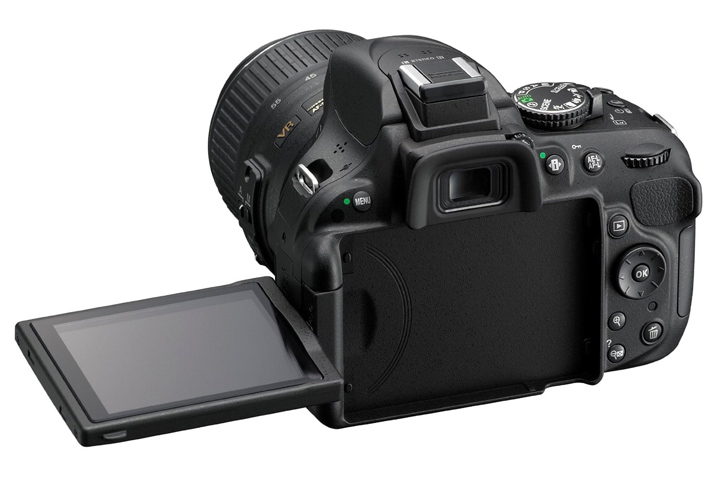
Swivel display on Nikon D5200
Housing and management
The body is made of plastic. The camera is well-assembled, as expected. My Nikon D5200 is Made in Thailand. Because of the camera's articulating display, there's no button block to the left of the display, making it more suited for right-handed operation. The D5200's display can be closed backwards, preventing damage during transport. The camera's menu is fairly straightforward, with helpful hints throughout. A beginner will find it easy to navigate the basic settings. I liked the INFO button menu, where shutter speed and ISO are displayed against a backdrop of circular control dials, reminiscent of old film cameras. The dials are animated and rotate based on the exposure.
Externally, the Nikon D5200 is very similar to the Nikon D5100 . The Nikon D5200 uses an EN-EL14 battery , the same as the Nikon D3200 , D5100 , and D3100 . Operating the camera is straightforward.
Sample photos:
Unprocessed photos. Photos were taken in VI, PO, and JPEG (L, Fine) modes. The files were resized to 3 MP and EXIF data was imprinted . All shots were taken with a Nikon 70-210mm and Nikon 18-70mm.


Features and useful features
- Endurance varies from 30s to 1/4000 seconds
- The minimum flash sync speed is 1/200 s. No camera FP mode.
- Auto matrix cleaning function.
- In RGB view mode bar charts You can view the histogram for any selected image fragment. The same function Nikon D7100.
- Auto distortion control for most lenses. This means that the camera automatically removes vignetting and distortion.
- Function multiple exposures.
- You can program the function button FN on one of the heap of the proposed parameters. I usually program FN to control ISO sensitivity. Instead of ISO control, you can set HDR shooting.
- Active D-lighting (has 4 steps of intensity) and noise reduction function at high ISO and slow shutter speeds.
- There is even an interval shooting function.
- A bunch of presets for shooting. A good menu for processing photos taken.
- HDR with different levels, you can set Moderate, Normal, Amplified, Super Amplified and Auto level. The camera takes two pictures in a row and combines them into one. A very useful thing for landscapes. Shooting in HDR with your hands is very bad.
- Quiet shooting mode Q. In fact, not so quiet, you can’t remove the sound of the mirror.
- The camera has a mechanism for independent control of the mirror and aperture. This allows you to achieve a small shutter lag, the lag (the shutter lag after pressing the shutter button) is only 0.09 seconds. When shooting in Live View, the camera does not lower the mirror, just like Nikon D7100, D600, D800,D800E.
- The camera supports remote radio control using the WR-R10 / WR-T10 device. And you can buy a special GPS module GP-1, which will be recorded in EXIF coordinates of the place of shooting.
- The camera supports the WU-1a device, which allows you to transfer images using wi-fi to devices running iOS, Android, and also allows you to control the camera remotely using the same devices.
- The easiest way to remote control is with an infrared remote control ML-L3.
- On the Nikon D5200 body there is a button that is responsible for the shooting mode - you can choose frame-by-frame, continuous slow, continuous fast, self-timer, delay shutter, fast shutter and quiet shooting mode.
- More instead of the usual SD cards, you can install a special Eye-Fi card that will transfer JPEG photos via Wi-Fi to a computer or other Wi-Fi-enabled devices.
- Can be used camera from the outlet using the EH-5b AC adapter with EP-5A connection.
- Auto release function. The self-timer can be set to a series of 9 shots. It is convenient to take self-portraits, especially with a group of people.

Example photo on Nikon D5200
Since the Nikon D5200 is one of Nikon's entry-level DSLR cameras , it lacks many of the features found in more advanced cameras:
- There is no focus motor, which makes it difficult to use old-cheap lenses, such as Nikon 50mm f / 1.8D AF Nikkor.
- No additional monochrome display
- There is no button for previewing the depth of field, which is convenient to program for useful functions.
- There is no second control dial that makes working with the camera easier. Such a disk is available in older models
- No way to manage flashes remotely, the ability to work with old optics AI-S type
- There is no way to use the battery pack
- There is no fine-tuning of focus and a bunch of other little things. Usually all these little things are simply not needed by the amateur photographer, I bring them more to understand the general picture of what you can or cannot expect from the Nikon D5200.

Example photo on Nikon D5200
A small comparison with similar in functionality cameras Nikon
| D3200 | D5100 | D5200 | |
| Exit time | July 2012 | April 2011 | November 2012 |
| RAW color depth | 12 bit | 14 bit | 14 bit |
| Number of megapixels | 24,06 | 16,08 | 24 |
| Burst Speed | 4 fps | 4 fps | 5 fps |
| Minimum ISO | 100 | 100 | 100 |
| Maximum ISO | 6400 | 6400 | 6400 |
| Maximum Extended ISO | 12.800 (Hi1) | 25600 (Hi2) | 25600 (Hi2) |
| Video length max. qualities | 20 minutes | 20 minutes | 30 minutes |
| Video | 1920 x 1080 30p | 1920 x 1080 30p | 1920 x 1080 60i |
| Sound | mono | mono | stereo |
| Display | 3 inches, 921.000 points | 3 inches, 921.000 points, rep. | 3 inches, 921.000 dots |
| Focus module | Multi-cam 1000 | Multi-cam 1000 | Multi-CAM 4800DX |
| Number of Focus Points | 11 | 11 | 39 |
| Measurement exposure | 420-pixel RGB sensor | 420-pixel RGB sensor | 2016-pixel RGB sensor |
| Memory cards | SD, SDHC, SDXC UHS-I | SD, SDHC, SDXC | SD, SDHC, SDXC UHS-I |
| Weight without battery, g | 505 | 510 | 505 |
| HDR | no | offers | offers |
You can also see and read about the Nikon D5200 (part in English)
- Official video presentation in Russian to pretty music. After this video, I myself wanted the D5200.
- Description on the official website nikon.ru
- Sample photos in original size at the office site.
- Performance indicators ISO, DD and color depth on DXOright there comparison with D3200
- Review in English from DPreview
- Video review in English from Kai wong
- Ken also did not bypass the camera, did here such a review in English
- Comparison of key features Nikon D5200 and Nikon D5100
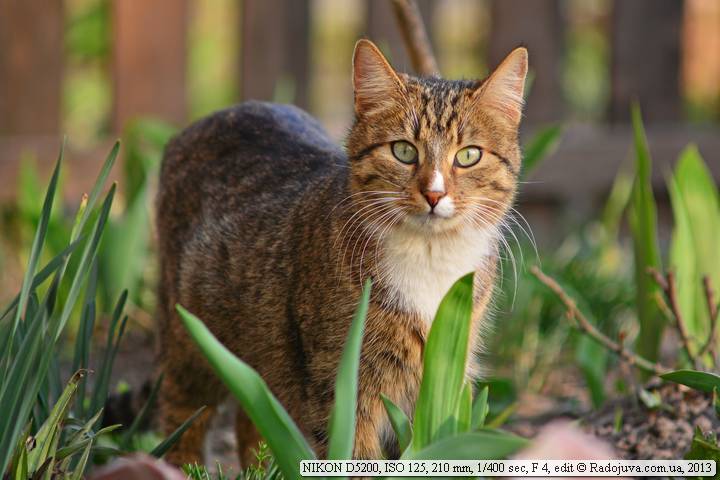
Example photo on Nikon D5200
Personal impressions
I liked the new Nikon D5200 ; it's in keeping with the good style of Nikon DX cameras. It's a shame people are being fooled with the 60i and 50i. I still use the tiny Nikon D40 , as video recording isn't particularly important to me, and photo quality depends on more than just the camera . Typically, an amateur camera is bought for simple home photography, a beach vacation, or just casual photography. For such tasks, a camera doesn't need any fancy features. Therefore, I recommend buying an older model , such as the D5100, D3200 , or D3100 , and using the money saved to buy an 18-105VR or 18-200VR lens . Of course, if you have the budget, the D5200 is the best amateur camera as of spring 2013 (when I wrote this review). Recommendations for choosing a camera and lenses can be found here , and recommendations for choosing an external flash can be found here.

Nikon D5200 with Nikon 55-300mm VR Telephoto Lens
Conclusions
The Nikon D5200 is a very good amateur camera, perfect for those who simply want good photo results without any extra effort. Its positive features include a 39-point autofocus system , 60i video quality with stereo sound, a tilting display, compact size, and ease of use.
An Accurate List of All Nikon DX Nikkor Lenses for DSLR Cameras
Fixes
- Nikon DX AF Fisheye Nikkor 10.5 mm 1: 2.8G ED GOLD [AMAZON]
- Nikon DX AF-S Nikkor 35 mm 1:1.8G SWM Aspherical [AMAZON]
- Nikon DXAF-S Microphone Nikkor 40 mm 1:2.8G SWM Micro 1:1 [AMAZON]
- Nikon DXAF-S Microphone Nikkor 85 mm 1: 3.5G ED VR SWM IF Micro 1:1 [AMAZON]
Wide angle
- Nikon DX AF-P Nikkor 10-20mm 1: 4.5-5.6G VR [AMAZON]
- Nikon DX AF-S Nikkor 10-24mm 1: 3.5-4.5G ED SWM IF Aspherical [AMAZON]
- Nikon DX AF-S Nikkor 12-24mm 1:4G ED SWM IF Aspherical GOLD [AMAZON]
Universal
- Nikon DX AF-S Nikkor 16-80mm 1:2.8-4E N ED VR SWM IF Aspherical GOLD [AMAZON]
- Nikon DX AF-S Nikkor 16-85mm 1: 3.5-5.6G ED SWM VR IF Aspherical [AMAZON]
- Nikon DX AF-S Nikkor 17-55mm 1:2.8G ED SWM IF Aspherical GOLD [AMAZON]
- Nikon DX AF-S Nikkor 18-55mm 1:3.5-5.6G ED SWM Aspherical [AMAZON]
- Nikon DX AF-S Nikkor 18-55mm 1:3.5-5.6GII ED SWM Aspherical [AMAZON]
- Nikon DX AF-S Nikkor 18-55mm 1: 3.5-5.6G SWM VR aspherical [AMAZON]
- Nikon DX AF-S Nikkor 18-55mm 1: 3.5-5.6GII VR II [AMAZON]
- Nikon DX AF-P Nikkor 18-55mm 1: 3.5-5.6G [AMAZON]
- Nikon DX AF-P Nikkor 18-55mm 1: 3.5-5.6G VR [AMAZON]
- Nikon DX AF-S Nikkor 18-70mm 1: 3.5-4.5G ED SWM IF Aspherical [AMAZON]
- Nikon DX AF-S Nikkor 18-105mm 1: 3.5-5.6G ED SWM VR IF Aspherical [AMAZON]
- Nikon DX AF-S Nikkor 18-135mm 1: 3.5-5.6G ED SWM IF Aspherical [AMAZON]
- Nikon DX AF-S Nikkor 18-140mm 1: 3.5-5.6G ED SWM VR IF Aspherical [AMAZON]
- Nikon DX AF-S Nikkor 18-200mm 1: 3.5-5.6G ED SWM VR IF Aspherical [AMAZON]
- Nikon DX AF-S Nikkor 18-200mm 1: 3.5-5.6GII ED SWM VR IF Aspherical [AMAZON]
- Nikon DX AF-S Nikkor 18-300mm 1: 3.5-5.6G ED SWM VR IF Aspherical [AMAZON]
- Nikon DX AF-S Nikkor 18-300mm 1: 3.5-6.3GED SWM VR IF Aspherical [AMAZON]
Televisions
- Nikon DX AF-S Nikkor 55-200mm 1: 4-5.6G ED SWM [AMAZON]
- Nikon DX AF-S Nikkor 55-200mm 1: 4-5.6G ED VR IF SWM [AMAZON]
- Nikon DX AF-S Nikkor 55-200mm 1: 4-5.6GII ED VR II [AMAZON]
- Nikon DX AF-S Nikkor 55-300mm 1: 4.5-5.6G ED VR SWM HRI [AMAZON]
- Nikon DX AF-P Nikkor 70-300mm 1: 4.5-6.3G ed [AMAZON]
- Nikon DX AF-P Nikkor 70-300mm 1: 4.5-6.3G ed VR [AMAZON]
Exact list of all Nikon F DX cameras:
- D1, D1h, D1x, D2h, D2x, D2hs, D2xs
- D100, D200, D300, D300s, D500
- D70, D70s D80, D90
- D7000, D7100, D7200, D7500
- D50, D40, D40x, D60
- D3000, D3100, D3200, D3300, D3400, D3500
- D5000, D5100, D5200, D5300, D5500, D5600
- + Fujifilm FinePix S1 Pro, S2 Pro, S3 Pro/S3 Pro UVIR, S5 Pro/IS Pro
- Basic information on the Nikon system (lenses, cameras, compatibility, a lot of information).
- Nikon camera selection (models, recommendations, discussion)
- All Nikon digital cameras with interchangeable lenses. Their types and dates of announcements. Camera designations s, h, x, e, a.
- Methods and modules for metering Nikon cameras.
- Processors of Nikon cameras. Performance.
- Focusing systems for Nikon cameras.
- Sensors of Nikon cameras (who produces, which models are used)
- Which external flash to choose for Nikon cameras?
- Other articles on Nikon / Nikkor cameras and lenses.
This material was prepared by Arkady Shapoval . The greatest support for the site is if you use links on this site, such as Amazon , when purchasing anything . It costs you nothing, but for this site, and therefore for my family, it's the main source of support.
why can't i set shutter speed shorter than 1/50 in live view? manual mode
Because the image in the live view is updated at such a speed, there will already be a slide show below.